

Vertical: Defense
Application: Secure data communications
Ecosystem: Ericsson, Leonardo
Private Network: 5G
Proving that advanced wireless connectivity is no longer confined to land-based deployments, Ericsson, Italian defense company Leonardo, and the Italian Navy have completed a successful maritime trial of a 5G Standalone private network operating on the open sea. The effort, conducted as part of the European Defense Fund’s 5G COMPAD project, demonstrated long-range 5G SA communications between two active naval vessels during both daytime and nighttime operational conditions in the Gulf of Taranto.
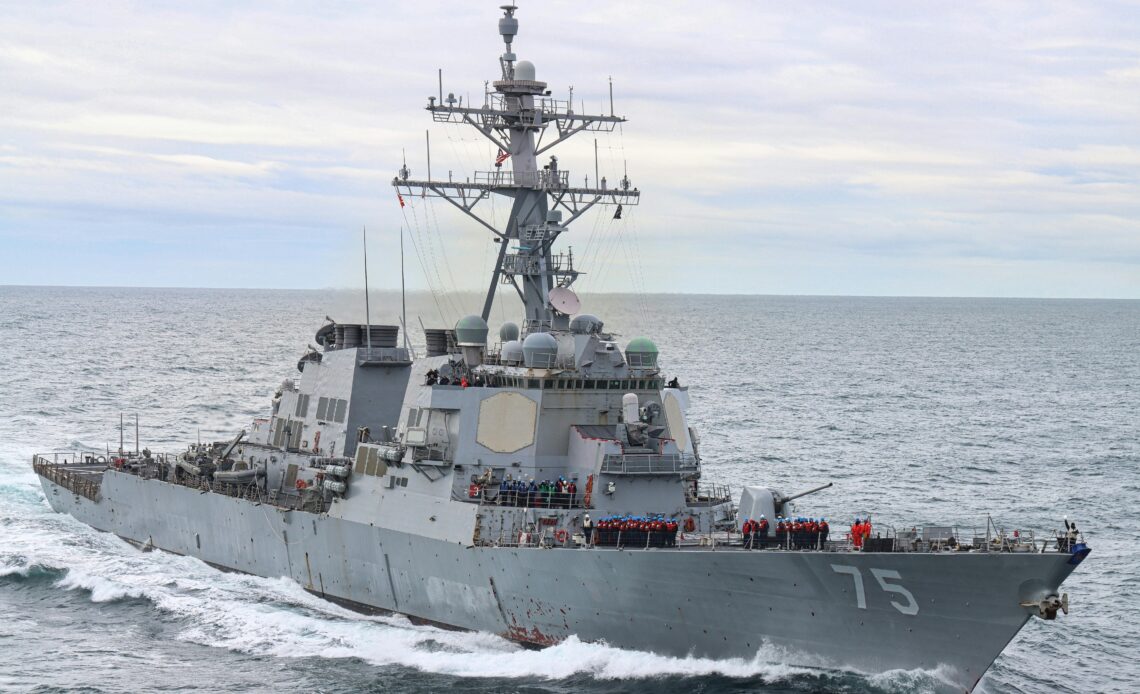
The architecture at the heart of the trial was fully self-contained. An end-to-end Ericsson 5G SA network – built around the Ericsson Ultra Compact Core and Ericsson Massive MIMO Radio Access Network — was installed aboard the Italian Navy’s amphibious landing ship San Giorgio, which functioned as the primary network node throughout the exercise. Ericsson 5G SA customer premises equipment was deployed on a second vessel, the multi-purpose combat ship Raimondo Montecuccoli, allowing the two ships to maintain connectivity entirely independent of shore-based infrastructure or satellite links.
What the network had to carry was notably demanding. Operators exchanged classified and unclassified data in real time, supported full situational awareness feeds from the Combat Management System, and processed video streams from 12 unmanned systems through an AI Brain platform – all simultaneously. Leonardo secured the entire data exchange using its NINE encryption solution, layering military-grade protection over the Ericsson 5G infrastructure. The successful handling of these concurrent workloads validated that 5G SA can meet the throughput and latency requirements of modern naval operations.
Beyond raw performance, the trial addressed a persistent pain point in naval communications: spectral interference. Warships historically rely on multiple separate radio systems operating across unlicensed and often overlapping frequency bands, creating significant interference risks. The experimentation – officially designated Italian Navy open-sea Operational Experimentation OPEX Task 2-25, conducted under the Multi-Domain Operational Experimentation Committee – demonstrated that consolidating these functions onto a single unified 5G network meaningfully improves spectrum management and eliminates the cross-system interference that burdens legacy setups.
Ericsson’s Freddie Södergren, Head of Mission Critical Networks, spoke to the broader significance of the result: “This successful trial with Leonardo and the Italian Navy represents a significant milestone in our ongoing commitment to advancing defense capabilities through 5G technology. As an integral part of Ericsson’s defense portfolio, our 5G platform is designed to meet the rigorous demands of the sector. This collaboration not only demonstrates the versatility of dual-use 5G in critical operations but also highlights how enhanced connectivity at sea can significantly strengthen naval communications and operational effectiveness.”
Patrick Johansson, Senior Vice President and Head of Ericsson Europe, Middle East and Africa, added context about Italy’s specific strategic position: “The Italian Navy is seeking the best possible connectivity solutions for its related needs, and we are proud to work with them towards that goal. Italy’s central Mediterranean location, with an exclusive economic zone spanning more than 500,000 Sq Km of sea, means the Italian Navy plays a strategically important role in Europe.”
This trial builds on an established relationship between Ericsson and the Italian Navy. In 2024, the two parties worked together as part of NATO trials, during which a complete 5G SA network was stood up at the Italian Naval base in Taranto. The OPEX 2-25 exercise extends that work into a fully operational at-sea environment, moving from fixed-base testing to dynamic multi-vessel connectivity under real operational conditions. Several other ecosystem partners also participated in the broader OPEX 2-25 campaign, underscoring the collaborative nature of the effort.
The implications reach well beyond naval defense. The same challenges that complicate connectivity at sea – mobile platforms, environmental interference, no fixed infrastructure, demanding security requirements — are equally relevant in commercial maritime sectors. Offshore energy platforms, deep-sea logistics vessels, and port operations all face versions of the same problem. A validated private 5G SA architecture capable of linking moving nodes across open water, without relying on satellite uplinks or shore infrastructure, offers a credible path forward for any industry that operates where terrestrial networks simply cannot reach.