

A leasing rep at a major New York office building described losing a 40,000-square-foot deal this way: the prospective tenant’s CEO dropped a call in the elevator during the tour. The building was recently renovated, the lobby gleaming, the asking rent competitive. None of that mattered. The deal went across the street.
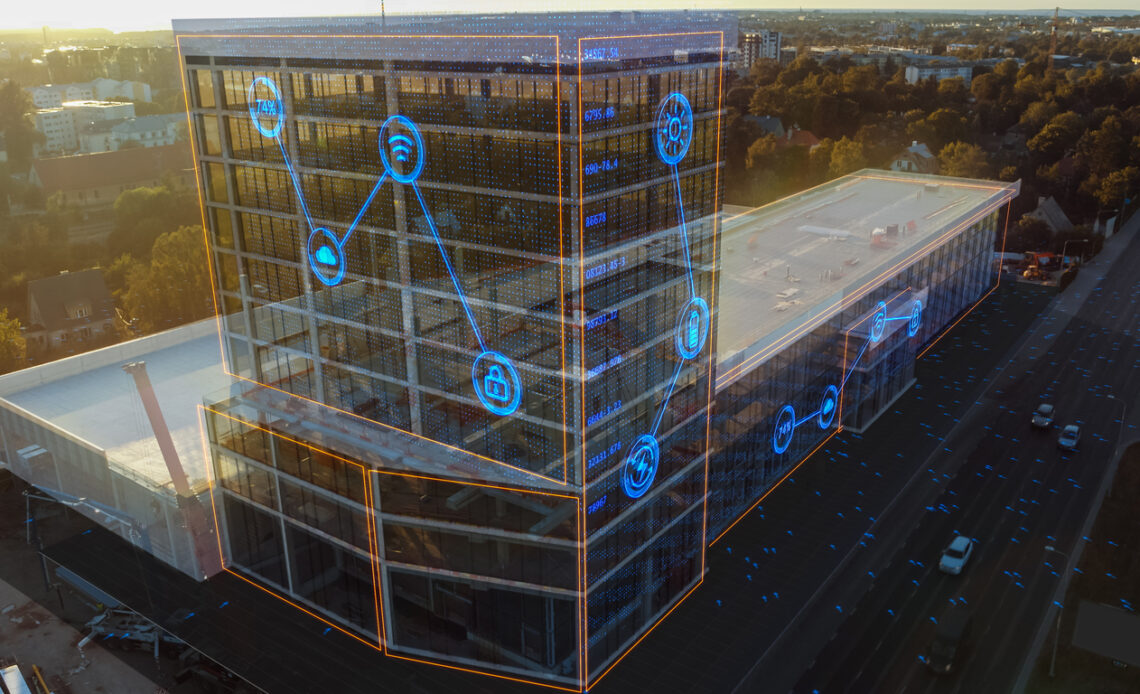
It’s not an isolated story. Leasing teams at Class A and Class B properties alike are discovering that cellular coverage has moved from a back-of-house infrastructure question to a front-of-tour first impression. In-Building Wireless (IBW) – the umbrella term for Distributed Antenna Systems (DAS), small cells, and private cellular networks deployed inside a structure – is no longer optional infrastructure. It’s a line item that asset managers are now treating as directly tied to occupancy, tenant retention, and net operating income.
The Rent Math Is No Longer Theoretical
WiredScore has certified over 4,000 buildings globally, and the data from that portfolio is consistent: certified assets command measurable rent premiums over uncertified peers in the same submarkets. Buildings holding both WiredScore and SmartScore certifications are averaging a 7.3% rental premium. In London’s City district or Midtown Manhattan, that gap can translate to millions in additional annual revenue on a single asset.
Research commissioned by WiredScore and conducted by independent firm Analytiqa found that tenants in financial and professional services – already the most demanding users of mobile connectivity – will walk from an otherwise suitable space if the cellular experience doesn’t meet basic expectations. WiredScore-certified North American office buildings show 3.8% lower vacancy and 2.2% greater rental growth than comparable non-certified peers, and tenants in certified buildings sign leases averaging nine months longer.
The competitive frame has shifted, too. A mid-tier office building isn’t just competing against the trophy tower down the street anymore – it’s competing against the tenant’s home office, which has seamless Wi-Fi and likely better LTE coverage than the building’s conference rooms. That’s a bar that can’t be cleared with a lobby renovation.
What Real Deployments Actually Look Like
When Related Companies developed Hudson Yards on Manhattan’s west side, connectivity infrastructure was engineered in during construction – not bolted on after tenant complaints. The result is a multi-tower campus where tenants, including major financial firms, run operations without fighting dead zones in parking structures or in basement conference rooms. That upfront decision eliminated years of remediation costs and the tenant relations friction that typically goes with them.
The contrast with older assets is instructive. Property managers retrofitting DAS into 1970s or 1980s-era Class B buildings – the ones with thick concrete floor plates and elevator shafts that swallow signal – are looking at project costs ranging from $2 million to $4 million for a 500,000 square foot building, before carrier agreements are even negotiated. The buildings that treat connectivity as a construction-phase decision are not engaging in those conversations.
SL Green’s One Vanderbilt in Midtown Manhattan opened fully leased in a market where competing assets were managing significant vacancy. The building was developed with both tenant connectivity and building operations running off a shared underlying network infrastructure. Connectivity was part of the pitch to anchor tenants, not an afterthought addressed during fit-out.
The Neutral Host Model: One Contract, All Carriers
For most landlords, the traditional path to multi-carrier cellular coverage meant separate negotiations with AT&T, T-Mobile, and Verizon, each seeking its own equipment footprint and its own space in the building. That model is being replaced by the neutral host approach, where a single third-party operator – companies like CTS, ExteNet Systems, Boingo Wireless, or Tillman Infrastructure – installs shared infrastructure that all carriers connect into.
For the landlord, the practical difference is significant: one contract, one equipment room, one maintenance relationship. Neutral host deployments eliminate redundant equipment and carrier-by-carrier negotiations, meaningfully reducing both capital and operational costs compared to separate carrier installations. For tenants, the result is consistent coverage regardless of which carrier their employees are on, which matters when a building houses multiple companies with different device fleets and carrier contracts.
Airports and large transit hubs have been running this model for years. It is now standard in new Class A office developments and increasingly common in large retail and mixed-use assets.
IoT and the Operations Case
The conversation about in-building wireless often focuses on mobile bars and dropped calls. Still, property managers who have gone through smart building deployments consistently say the operations case is where the real long-term value lives. Kilroy Realty’s properties in San Francisco and Los Angeles have deployed wireless-connected building management systems that monitor HVAC performance, occupancy, and energy use in near real-time. The results are measurable: lower utility bills, fewer emergency maintenance calls, and the ability to staff cleaning and facilities teams based on actual foot traffic data rather than fixed schedules built around assumptions.
Wireless-enabled building management systems have demonstrated energy consumption reductions of 15% to 25% by optimizing HVAC and lighting systems based on real-time occupancy data. For a one million square foot office campus, that range represents a material line item in annual operating expenses – not a rounding error.
Private 5G: From Pilot to Production in Industrial Real Estate
The industrial real estate market has moved furthest on private cellular, because the requirements there are less about mobile bars and more about operational continuity. Prologis – the largest industrial REIT globally – has been building out private LTE and 5G connectivity across select logistics facilities to support tenants running automated guided vehicles, RFID inventory tracking, and real-time fulfillment systems. For a tenant operating 24/7, a dead zone isn’t a nuisance – it’s a line-stoppage event.
Prologis recognized that connectivity had become a site-selection criterion for major e-commerce and third-party logistics tenants, alongside clear heights and dock-door counts as baseline requirements. That shift happened faster in the industrial than in the office. Still, the office market is following the same trajectory as enterprise tenants increasingly bring automation and IoT-dependent workflows into their spaces.
2025 marked the inflection point for private 5G, moving from extended pilots to production deployments. The CBRS (Citizens Broadband Radio Service) spectrum band in the U.S. has significantly lowered the barrier to entry – landlords and enterprises can now deploy private networks without acquiring licensed spectrum or relying on carrier cooperation.
What Landlords Are Getting Wrong
The most common mistake is treating in-building wireless as a one-time capital project rather than an ongoing infrastructure discipline. Buildings that installed DAS systems in 2018 or 2019 and haven’t revisited them are finding that the equipment handles voice adequately but struggles with the data demands of a workforce that streams, video conferences, and uploads files continuously. The system is technically functional; it just doesn’t meet tenants’ needs in 2026.
The second mistake is conflating Wi-Fi with cellular. These are complementary systems, not substitutes. A building with excellent managed Wi-Fi still has employees spending meaningful time in elevators, parking garages, outdoor plazas, and common areas where often cellular is the only option. Cellular also handles voice calls more reliably than Wi-Fi in most building configurations – which matters when a tenant’s CFO drops a call on the way to a board meeting.
The third is underestimating the coverage problem below grade. Basements, parking structures, and loading docks are consistently the worst-performing areas in any connectivity assessment – and they’re also the areas where maintenance staff, delivery personnel, and increasingly, automated systems need reliable connectivity most.
The Practical Starting Point
For owners who haven’t conducted a formal connectivity assessment, the starting point is simpler than it sounds: a walk test that maps actual signal strength throughout the property, including every elevator, stairwell, parking level, and below-grade space. The results typically tell a clear story about where gaps exist, and what it would realistically cost to close them. Remember: no single technology (DAS, Wi-Fi, CBRS Neutral Host, Private 5G, and others) addresses every emerging connectivity gap. Evaluate the right mix
The business case for in-building wireless in 2026 isn’t a forecast. It’s a present-tense conversation happening in every leasing office, every tenant renewal discussion, and every asset manager’s quarterly review. Buildings that have addressed it retain tenants, attract stronger replacements, and outperform their submarkets on rent. Buildings that haven’t are already feeling the gap – they’re just not always sure that connectivity is why.