
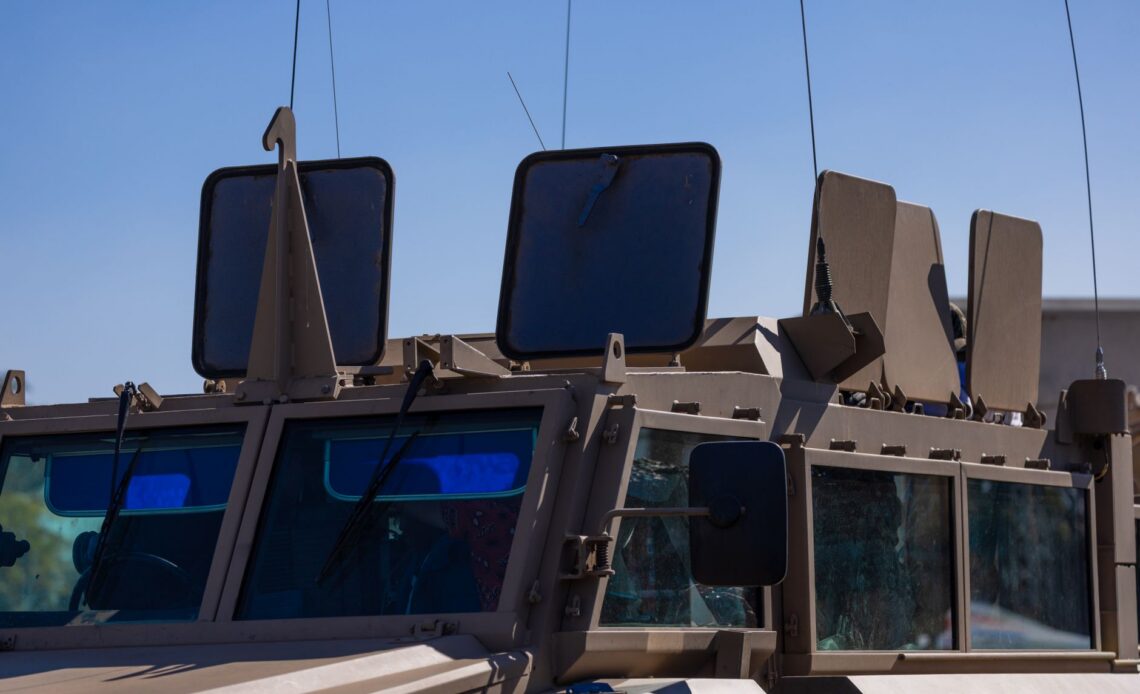
Vertical: Defense
Application: Tactical battlefield communications, private 5G, satellite connectivity, mesh networks, drone operations, AI-powered network automation
Ecosystem: Ericsson, KNL (Telenor Group), BT, Airbus, BAE Systems, Babcock, Elbit, CGI IT, Computacenter, Centerprise, Entserv (DXC), Radionor, Blacktree, Blu Wireless, DTC, Drumgrange
Private Network: 5G Standalone (5G SA), satellite, mesh networks, HF radio
| The UK Ministry of Defence has selected Ericsson as a key supplier in its £8 billion tactical communications overhaul, marking one of Europe’s largest defense private 5G procurements to date. The eight-year RM6393 framework through 2034 positions private 5G, AI, and drone connectivity at the center of NATO’s battlefield modernization ahead of a perceived 2030 threat window. |
Ericsson has secured a direct supply role in the UK Ministry of Defence’s £8 billion tactical communications framework, positioning the Swedish vendor to deliver private 5G infrastructure and services for British Armed Forces operations through June 2034. The appointment under the RM6393 Tactical Communication Systems framework underscores the accelerating shift toward cellular-based battlefield networks as militaries across NATO prepare for electronic warfare, signal jamming, and cyber-disruption scenarios informed by lessons from the conflict in Ukraine.
The framework supports Project Morpheus, the UK’s flagship initiative to replace the legacy Bowman communications system with a resilient, multi-domain network combining private 5G, satellite links, mesh architectures, and high-frequency radio. Ericsson was selected for Lot 1 (Services) and Lot 3 (Components), joining more than 70 approved suppliers across three procurement categories. The framework is valued at £8.027 billion excluding VAT, or £9.632 billion including VAT, and will reopen twice during its lifespan to onboard emerging technologies and startups focused on drone automation and signal encryption.
| Metric | Detail |
| Network type | Private 5G Standalone (5G SA), satellite, mesh networks, HF radio (3 to 30 MHz) |
| Framework value | £8.027 billion (excl. VAT), £9.632 billion (incl. VAT) |
| Vendor(s) | Ericsson (Lots 1 & 3), KNL/Telenor Group (Lots 2 & 3), BT, 70+ defense primes and integrators |
| Timeline | 26 June 2026 to 25 June 2034 (8 years, with two planned reopenings) |
| Coverage | UK Armed Forces: Army, Navy, Air Force tactical operations |
| Key technologies | Private 5G, AI-driven network automation, drone connectivity, 5G sensing for threat detection |
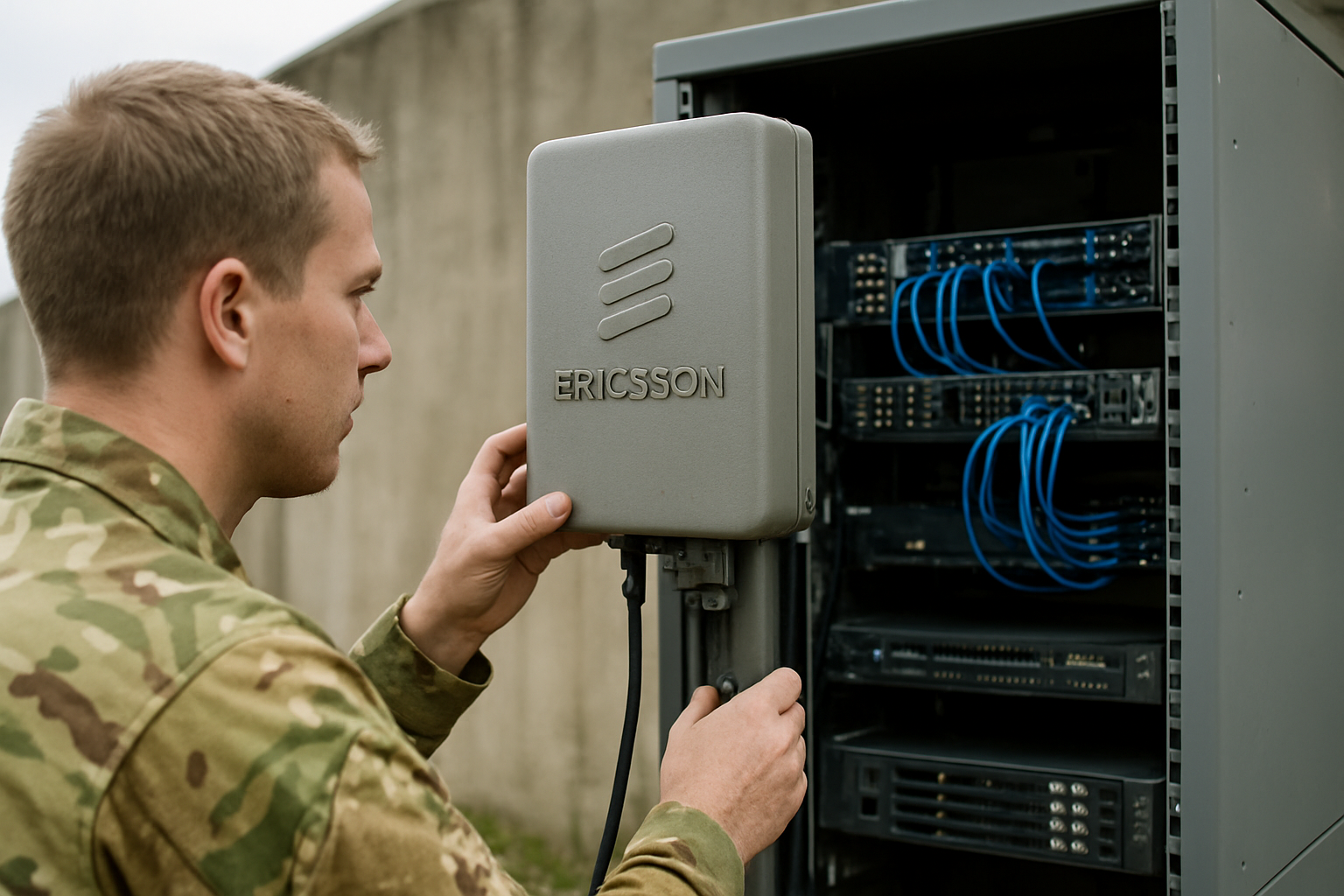
A Defense Procurement Vehicle Built for Speed and Flexibility
The RM6393 framework represents a structural shift in UK defense procurement, designed to bypass the sluggish contract cycles that historically locked the Ministry of Defence into decades-long agreements with a handful of large contractors. Built under the Procurement Act 2023, the framework divides suppliers into three lots: Services, Systems, and Components. A total of 55, 67, and 74 suppliers were selected across the three categories respectively, with substantial overlap. Ericsson’s inclusion in Lots 1 and 3 allows the company to supply both consulting and integration services as well as physical network components such as 5G radios, core network elements, and spectrum management tools.
The lot structure is designed to enable smaller specialist firms to sell directly to the MoD without routing through large international primes. Among the approved suppliers, UK telco BT secured a position in Lot 2 (Systems), likely covering 5G network slicing for military facilities, fiber backbone support for private 5G deployments, and systems integration of vendor equipment. Finnish vendor KNL, part of Norway’s Telenor Group, was appointed to Lot 2 (Systems, estimated at £4.7 billion) and Lot 3 (Components, estimated at £727 million) to supply high-frequency radio systems operating in the 3 to 30 MHz band. Other major contractors include Airbus, BAE Systems, Babcock, Elbit, CGI IT, Computacenter, Centerprise, and dozens of niche technology firms such as Blu Wireless, DTC, and Drumgrange.
Project Morpheus and the Shift to Multi-Domain Connectivity
The RM6393 framework feeds directly into Project Morpheus, the UK’s comprehensive program to overhaul battlefield communications for all branches of the British Armed Forces. Morpheus aims to replace the Bowman system, a radio-centric platform introduced in the early 2000s, with a software-defined, IP-based architecture that can route voice, video, and sensor data across private 5G cells, satellite terminals, and shortwave radio links. The system is designed to connect personnel, ground vehicles, unmanned aerial vehicles, weapons systems, and distributed sensors in contested electromagnetic environments where adversaries deploy jamming, spoofing, and cyberattacks.
Operational lessons from Ukraine have driven the requirement for resilient, composable networks that can automatically reroute traffic if one connectivity layer is disrupted. Ericsson’s flexible private 5G platform, combined with KNL’s high-frequency radio systems and satellite backhaul from other framework suppliers, aims to deliver a mesh of overlapping connectivity domains. In scenarios where cellular infrastructure is jammed or destroyed, tactical units can fall back to HF radio or satellite links, maintaining command-and-control channels and real-time intelligence feeds. The UK’s tactical 5G approach mirrors Spain’s deployment of a permanent NATO tactical 5G network at the Lešť base in Slovakia, where mobile 5G nodes support multinational battlegroup exercises and validate emerging connectivity concepts in field conditions.
Ericsson’s Direct Defense Strategy and Nokia’s Absence
Ericsson’s selection for the RM6393 framework highlights a strategic divergence between the two leading European 5G vendors. Nokia, which has deep experience in mission-critical networks through its acquisition of Alcatel-Lucent and its public safety LTE portfolio, is notably absent from the published supplier roster. While Nokia may participate in the framework indirectly through third-party defense contractors, Ericsson has pursued a direct-engagement model with military procurement agencies. The Swedish vendor has recently expanded its mission-critical networks division and invested in defense-specific features such as 5G sensing for drone detection, AI-powered network automation, and advanced spectrum management techniques to coexist with military radar and electronic warfare systems.
Nadine Allen, head of Ericsson in the UK, emphasized the company’s positioning in the defense modernization wave. The framework allows Ericsson to work directly with the Ministry of Defence to deliver secure, resilient, and future-proof communications infrastructure. Ericsson’s recent defense engagements include a maritime connectivity trial with Leonardo and the Italian Navy, where the company deployed a 5G Standalone system aboard the amphibious landing ship San Giorgio, demonstrating long-range data links during day and night naval exercises. The Italian trial used Ericsson Ultra Compact Core, Ericsson Transport, and Ericsson Massive MIMO Radio Access Network products, validating the feasibility of shipboard 5G for coordinating unmanned vessels and distributed sensors.
| “Modern defence requires a new level of connectivity, where data-driven capabilities are essential for operational success. We are proud to bring our global leadership in 5G and mission-critical networks to support the UK’s defence modernisation. This framework allows us to work directly with the MOD to deliver secure, resilient, and future-proof communications that will serve as the foundation for the UK’s digital defence capabilities for years to come.” Nadine Allen, Head of Ericsson UK, Ericsson |
Defense Investment Plan and the 2030 Threat Window
The RM6393 framework aligns with the UK government’s Defence Investment Plan (DIP), announced in early 2026, which commits an additional £15 billion to boost the total defense budget to £298 billion over the next four years. The plan targets defense spending of 2.7 percent of GDP by 2029, up from current levels, and reflects NATO assessments that adversaries such as Russia may be prepared to challenge the alliance by 2030. The perceived 2030 threat window has accelerated procurement timelines across NATO member states, with particular urgency around electronic warfare resilience, cyber defense, and the integration of autonomous systems such as drones and robotic ground vehicles.
The UK’s strategy emphasizes sovereign defense manufacturing and the prioritization of British companies and small to medium enterprises (SMEs) in procurement processes. The RM6393 framework is structured to support this goal, allowing specialist firms to compete for contracts without navigating the gatekeeping dynamics of traditional defense primes. The framework will reopen in 2029 to accommodate technology startups with breakthroughs in areas such as AI-driven signal encryption, swarm drone coordination, and adaptive spectrum management. This iterative procurement model is designed to keep pace with the rapid evolution of battlefield technologies and ensure that the MoD can integrate cutting-edge capabilities as they mature.
Technical Architecture and Use Cases
Ericsson’s tactical 5G solution for the RM6393 framework is built on 5G Standalone architecture, enabling network slicing, ultra-low latency, and edge computing capabilities required for time-sensitive military applications. The deployment will support a range of use cases including real-time video feeds from reconnaissance drones, augmented reality overlays for situational awareness, coordination of unmanned ground vehicles, and sensor fusion from distributed Internet of Things (IoT) devices monitoring logistics, infrastructure, and personnel. The network is designed to operate in austere, mobile, and contested environments, with rapidly deployable cells that can be transported in backpacks, vehicle-mounted systems, or containerized units.
The private 5G infrastructure will interconnect with satellite terminals for beyond-line-of-sight communications and with KNL’s high-frequency radio systems for fallback in scenarios where cellular spectrum is denied or degraded. AI-powered network automation will dynamically allocate spectrum, adjust power levels, and reroute traffic in response to interference, jamming, or physical damage to infrastructure. The system also incorporates 5G sensing techniques, using radio signals to detect and track low-altitude drones and other airborne threats, providing an additional layer of situational awareness beyond traditional radar. These capabilities reflect broader trends in defense connectivity, where armed forces globally, from the U.S. Department of Defense’s FutureG program to Germany’s Digitalization of Land-Based Operations (D-LBO) initiative, are investing in private 5G as the backbone for data-driven warfare.
Broader Defense 5G Momentum Across NATO and Allied Nations
The UK’s RM6393 framework is part of a wider wave of defense private 5G deployments across NATO and allied nations. Spain recently installed a permanent tactical 5G network at the Lešť base in Slovakia, where Spanish forces lead a NATO multinational battlegroup, and the deployment serves as a testbed for NATO’s Pilot Project 5 (PP5) program validating emerging technologies in operational settings. Latvia’s LMT, in partnership with Nokia, operates Europe’s first 5G military testbed at the Ādaži NATO base, supporting joint exercises and the integration of drones, sensors, and autonomous vehicles. Telefónica conducted a pilot aboard a NATO Maritime Command vessel in late 2025, deploying a 5G node to connect ships and unmanned maritime units during a four-month mission.
The UK Ministry of Defence has also awarded contracts through NATO’s Defence Innovation Accelerator for the North Atlantic (DIANA) initiative, including a June 2026 agreement with Microamp to test advanced millimeter-wave 5G communication in combat scenarios. These parallel efforts underscore the strategic priority NATO places on assured, high-bandwidth connectivity as a force multiplier. In the Indo-Pacific, South Korea’s Ministry of National Defense is deploying private 5G for smart bases and command centers, while Australia and Japan are exploring tactical 5G for joint operations. The convergence of private cellular, satellite, and mesh technologies, as embodied in frameworks like RM6393, represents a generational shift in how militaries communicate, coordinate, and execute missions in multi-domain battlespaces.
| KEY INSIGHT The UK’s £8 billion RM6393 framework demonstrates that defense agencies are now treating private 5G as core infrastructure, not experimental technology. Enterprises in critical sectors such as ports, manufacturing, and energy should monitor defense 5G architectures for lessons in resilience, multi-domain connectivity, and AI-driven network automation, all of which have direct applicability to industrial operations facing cyber threats and extreme reliability requirements. |
Related Reading
- Spain installs a permanent NATO tactical 5G network at Lešť
- Deutsche Telekom and Ericsson Bring Private 5G to Hamburg’s Container Terminal Altenwerder
- TERAGO and Ericsson Deploy Private 5G in Canada at MMRI
Frequently Asked Questions
What is the RM6393 framework and what does it cover?
The RM6393 Tactical Communication Systems framework is an £8 billion, eight-year procurement vehicle enabling the UK Ministry of Defence to acquire private 5G, satellite, mesh networks, AI tools, and drone connectivity for battlefield operations through June 2034.
Why was Ericsson selected for the UK defense framework?
Ericsson was chosen for Lots 1 (Services) and 3 (Components) based on its 5G Standalone capabilities, mission-critical networks portfolio, AI-powered automation, and experience in defense deployments including maritime trials with the Italian Navy and previous NATO engagements.
How does the UK’s tactical 5G network address electronic warfare threats?
The RM6393 framework mandates resilient multi-domain connectivity combining private 5G, satellite terminals, and HF radio, enabling automatic traffic rerouting if cellular spectrum is jammed or cyberattacked, informed by operational lessons from Ukraine and NATO exercises.
What is Project Morpheus and how does RM6393 support it?
Project Morpheus is the UK’s program to replace the legacy Bowman communications system with a software-defined, IP-based network. The RM6393 framework provides the procurement mechanism to acquire the private 5G, satellite, and AI technologies that underpin Morpheus architecture.
Which other vendors were selected alongside Ericsson in the RM6393 framework?
More than 70 suppliers were approved across three lots, including KNL (Telenor Group) for HF radio and systems integration, BT for systems and network slicing, plus defense primes Airbus, BAE Systems, Babcock, Elbit, and technology integrators such as Computacenter and CGI IT.
How does the UK defense framework compare to other NATO tactical 5G initiatives?
The UK’s £8 billion RM6393 framework is among Europe’s largest defense 5G procurements, comparable in scope to Spain’s NATO tactical 5G at Lešť, Latvia’s Ādaži testbed, and the U.S. Department of Defense FutureG program, all prioritizing private cellular for multi-domain operations.