
Vertical: Sports
Application: Automated ball-strike challenge system
Ecosystem: T-Mobile
Private Network: 5G
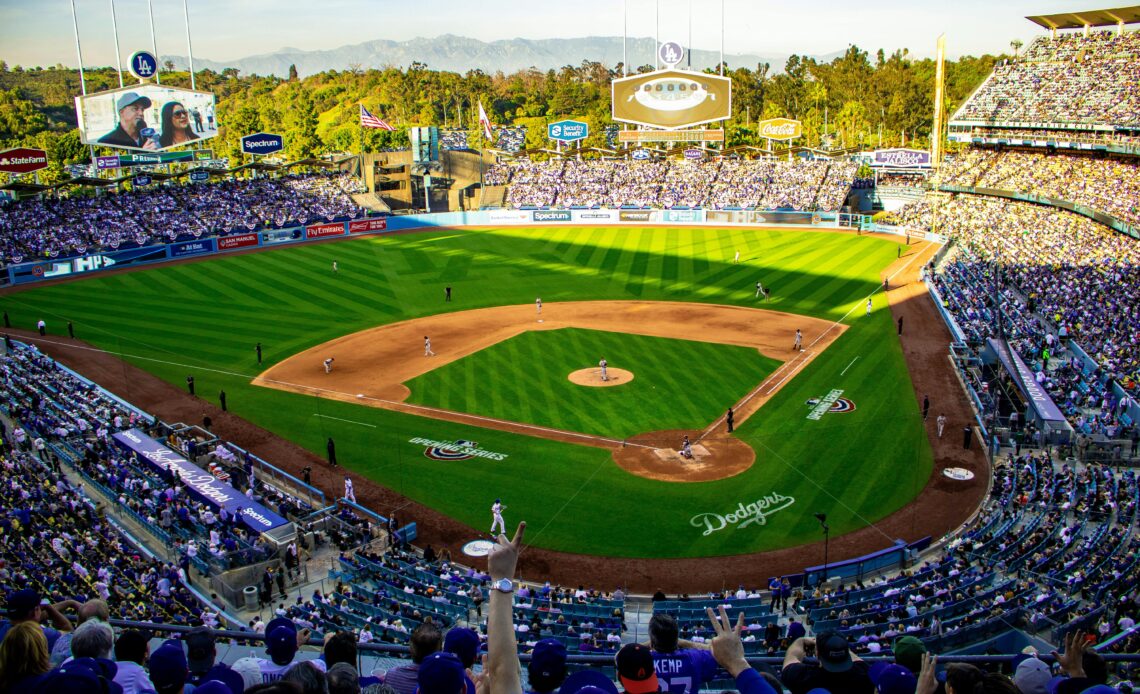
When a catcher taps his helmet to challenge a ball-strike call this season, the decision that follows — appearing on the scoreboard within roughly 14 seconds — is the visible output of an invisible infrastructure. That infrastructure is a private 5G network, purpose-built for Major League Baseball by T-Mobile’s Advanced Network Solutions division, and it is now deployed across every MLB ballpark in the United States. The network is not a supporting feature of the league’s new Automated Ball-Strike (ABS) Challenge System. It is the reason the system can function at the major league level at all.
The choice to build on a private network rather than rely on public Wi-Fi or shared cellular infrastructure was deliberate and technically driven. Stadium environments present some of the most demanding connectivity conditions imaginable — tens of thousands of devices competing for spectrum, interference from broadcast equipment, and zero tolerance for latency spikes during game action. A missed connection on a public network is an inconvenience for a fan trying to check a box score. On the ABS system, it means a challenged call cannot be reviewed and the moment is lost. Private 5G eliminates that exposure by dedicating spectrum and network resources exclusively to MLB’s operational systems, isolated from the noise of the general fan environment.
The network supports a more extensive set of workloads than the challenge system alone. When a player initiates a challenge, an ABS system operator uses the private network to trigger the review, transmitting Hawk-Eye camera data securely to the ABS infrastructure. That same network connects the laptops MLB officials use to input lineups and validate each batter’s individualized strike zone before and during games. It also supports the tablets players use to review pitch data and multi-angle in-game video between at-bats. Every one of those connections requires consistent, low-latency throughput — not burst performance, but reliable sustained performance across a full three-hour game with no degradation.
The Hawk-Eye system feeding data into the network consists of twelve cameras positioned around each ballpark, capturing pitch movement at 300 frames per second. Those cameras track the ball’s trajectory and map it against a digital strike zone customized to each individual batter’s measured height — the top of the zone set at 53.5 percent of the batter’s height, the bottom at 27 percent, measured at the midpoint of home plate. The precision is exceptional: Hawk-Eye’s margin of error runs to approximately one-sixth of an inch. But that precision is only useful if the data moves fast enough to matter, which returns the conversation to the network. The cameras generate the measurement; the private 5G network delivers it.
“We’ve spent years working alongside MLB to test and refine this technology — from the Minor Leagues to the All-Star Game,” said Amy Azzi, Vice President of Sponsorships at T-Mobile. “Now it’s ready for the regular season, showing how America’s Best Network can power new innovation in the sport, while preserving everything fans love about the game.”
That testing history is meaningful from a network deployment perspective. T-Mobile did not arrive at Opening Day 2026 with an untested architecture. The private 5G infrastructure was first exercised at select Minor League ballparks, then brought to the 2024 MLB All-Star Futures Game, and most recently operated through 2026 spring training at Steinbrenner Field in Tampa. Each deployment stress-tested different aspects of the system — venue size, crowd density, broadcast load — and the results shaped the production configuration now running across all 30 MLB venues. The spring training deployments in particular confirmed the 14-second average challenge resolution time that MLB is now promising fans for the regular season.
“Major League Baseball has always evolved while staying true to the heart of the game,” said Joe Martinez, MLB’s Vice President of On-Field Strategy. “The ABS Challenge System strikes the right balance — keeping the human element behind the plate while putting a tool in the players’ hands in a fan-friendly manner. With T-Mobile’s private 5G network powering the system in our ballparks, we can deliver accurate calls in seconds without disrupting the rhythm of play.”
Beyond the ABS system, the same private network infrastructure handles a wider set of stadium operational demands. At major events like All-Star Week, T-Mobile’s deployment expands its function to include prioritized connectivity for operations teams and first responders through a capability called T-Priority, which allocates up to five times more network resources for mission-critical communications during peak congestion. The network also supports non-ticketed staff entry via facial recognition, and enables rapid content upload for MLB photographers and broadcast crews working on tight deadlines. These workloads make the case that the private network was never designed as a single-purpose installation — it was designed as a shared operational platform.
For enterprise decision-makers evaluating private wireless deployments, the MLB implementation offers an unusually visible proof point. Most private 5G networks operate in warehouses, manufacturing floors, or ports — environments where the output is operational efficiency measured in logistics metrics. The MLB deployment operates in a venue where its performance is observed by tens of thousands of people in real time, and where a failure would surface immediately and publicly. That is a demanding test of any network, and the league’s decision to build on private 5G rather than a more conventional alternative reflects confidence that the technology is mature enough for exactly those conditions. When the first pitch of the 2026 season crosses home plate on March 25, the private network underneath it will have already proven itself — not in a controlled demonstration, but in hundreds of innings of spring training action, with more to come across a full 162-game season.