
Vertical: Agriculture and Security
Application: AI-enabled video surveillance, autonomous drone patrols, fire detection, thermal imaging, facial recognition, license plate recognition
Ecosystem: Moso Networks, Pente Networks, Global Telecom, Redtail Communications, Nightingale Security, ESP, Alliance Corporation
Private Network: CBRS-based private 5G
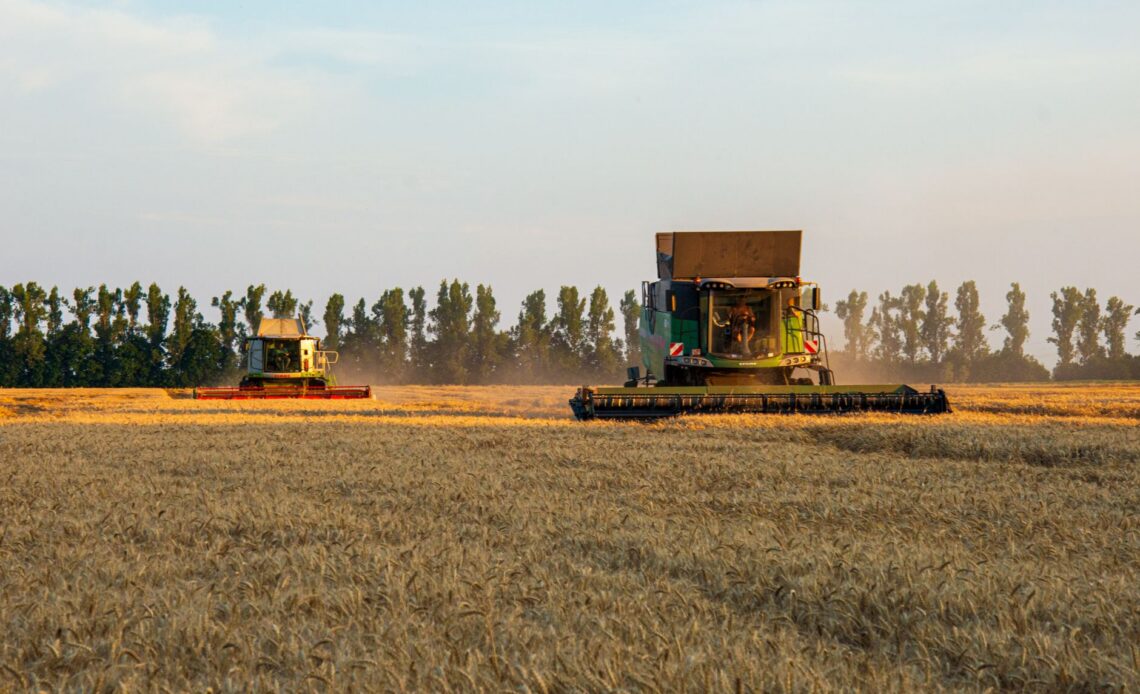
| A private 5G network covering 100,000 acres in rugged Rocky Mountain terrain now secures a working ranch using just six radios. The CBRS-based deployment connects fixed AI-enabled cameras and autonomous drones on a single infrastructure spanning nearly 50 miles, with fiber backhaul and Starlink backup ensuring reliable coverage where public cellular service cannot reach. |
Alliance Corporation has coordinated a multivendor private 5G deployment at a working ranch spanning 100,000 acres in the Rocky Mountains, addressing security and fire-monitoring challenges across terrain where public cellular networks offer only sparse coverage and extending fiber to every endpoint would prove impractical. The network connects AI-enabled security cameras and autonomous patrol drones using CBRS Band n48 spectrum, delivering connectivity across a property spanning nearly 50 miles. The deployment relied on Moso Networks Canopy 5GOD2 outdoor radios for radio access, a Pente Networks HyperCore 5G core, Global Telecom Titan 5100 outdoor user equipment, Nightingale Security autonomous drones, and an ESP-managed camera platform, with integration work performed by Redtail Communications.
Dan Ortega, senior sales engineer at Alliance Corporation, designed the overall architecture and coordinated integration across vendors. The ranch’s production network uses six Moso Canopy 5GOD2 high-power outdoor gNodeBs positioned along mountain ridges to target coverage at camera sites and throughout designated drone patrol areas. This targeted approach provided necessary coverage without requiring radios blanketing the entire 100,000-acre property. Rugged terrain, dense tree cover, and a seven-to-eight-mile private road connecting remote security sites made fiber extension and Wi-Fi impractical, while sparse public cellular coverage left those sites effectively disconnected.
| Metric | Detail |
| Network type | Private 5G (CBRS Band n48) |
| Spectrum | CBRS Band n48 |
| Sites / cells | Six Moso 5GOD2 outdoor radios |
| Coverage | 100,000 acres spanning nearly 50 miles |
| Devices | Global Telecom Titan 5100 outdoor UEs, AI cameras, three autonomous drones |
| Vendor(s) | Moso Networks (RAN), Pente Networks (core), Global Telecom (UE), Nightingale Security (drones), ESP (cameras) |
| Integrator | Alliance Corporation (design), Redtail Communications (installation) |
| Backhaul | Fiber primary, Starlink secondary |
Security Applications Driving Private 5G Deployment
The ranch required a network capable of supporting both fixed AI-enabled cameras and mobile autonomous drones across remote, rugged terrain. The ESP platform manages the cameras and provides AI-enabled video surveillance and analytics for fire detection, thermal imaging, facial recognition, and license plate recognition. Fire detection proved particularly critical given the ranch’s location in wildfire-prone Rocky Mountain terrain, where early warning and rapid response can prevent catastrophic losses. Nightingale Security supplied three autonomous drones that patrol the perimeter and return to automated docks to transfer data and recharge before resuming operations. The drones required reliable connectivity throughout their patrol areas, presenting a mobility challenge that fixed infrastructure alone could not address.
Alliance Corporation’s design had to accommodate both stationary and mobile endpoints on a single network. Global Telecom Titan 5100 outdoor 5G user equipment links remote security sites to the private network. The Titan 5100 supports up to 4.8 Gbps of peak throughput over the 5G air interface, depending on network configuration and downlink or uplink split ratios. This throughput capacity enables high-definition video streaming from multiple cameras at each site, while also maintaining connectivity for autonomous drones transmitting real-time video during patrol flights. The deployment shares operational similarities with a Spanish military emergency unit’s private 5G network supporting mobile nodes and drone extensions, though the Rocky Mountain ranch operates on CBRS spectrum rather than licensed bands.
Radio Access Network Architecture and Coverage Strategy
The production network uses Moso Canopy 5GOD2 high-power outdoor radios positioned strategically along mountain edges to target coverage where needed rather than across the entire property. The Canopy 5GOD2 represents Moso’s next-generation 5G outdoor radio and is the industry’s first Release 16 outdoor private 5G gNodeB built on the Qualcomm FSM200 5G RAN platform. Key features include 4×4 MIMO and 20W total transmit power to provide the FCC limit for CBRS Category B EIRP, delivering extended range necessary for the ranch’s challenging propagation environment. Alliance Corporation drew on its experience with previous Moso implementations to recommend Moso’s newer 5G platform for the production architecture. The targeted placement of just six radios across a 100,000-acre footprint demonstrates the reach achievable with high-power CBRS equipment in outdoor environments.
Redtail Communications equipped each site with a rectifier, UPS backup, switching, an enclosure, and a tower, then installed the cameras and outdoor radios. The ranch initially considered solar energy but chose to run power to each site, requiring approvals and extensive construction that accounted for most of the fieldwork. Once the power infrastructure was in place, installation of the radio and camera equipment proceeded relatively quickly. The deployment’s coverage strategy parallels approaches used in large-scale airport private 5G networks covering thousands of acres, though the ranch’s mountainous terrain presented more challenging propagation conditions than flat airport grounds.
| “We designed the overall private 5G architecture and coordinated integration across the RAN, core, user equipment, backhaul, camera platform, and remote sites. That work brought technologies from Moso, Pente, Global Telecom, and Nightingale into one complete security network.” Dan Ortega, Senior Sales Engineer, Alliance Corporation |
Core Network and Backhaul Infrastructure
Alliance Corporation paired the Moso RAN with a Pente Networks HyperCore 5G core, which provides RAN-agnostic architecture to simplify integration and management of multivendor private 5G networks. At the ranch, the platform manages device access, data sessions, and mobility for camera-site user equipment and autonomous drones on a single private network. The architecture separates private 5G radio access from primary and backup backhaul. Fiber carries primary backhaul traffic from the Moso RAN to the Pente HyperCore 5G core, while Starlink supplies a secondary path if fiber fails. This dual-backhaul design ensures network resilience critical for security applications where connectivity loss could create blind spots in surveillance coverage or strand autonomous drones mid-patrol.
The HyperCore’s ability to manage heterogeneous endpoints proved essential given the deployment’s mix of stationary cameras and mobile drones. The deployment shares architectural similarities with port environments supporting diverse mobile equipment, where core platforms must manage connectivity for vehicles, sensors, and other endpoints moving across large footprints.
Autonomous Drone Integration and Pre-Deployment Testing
Nightingale Security’s autonomous drones required reliable connectivity throughout their patrol areas, presenting a unique challenge given the drones’ mobility and the ranch’s rugged terrain. To reduce integration risk and avoid costly troubleshooting at the remote ranch site, Alliance Corporation conducted pre-deployment testing at Nightingale Security’s lab in Newark, California. Dan Ortega traveled to the facility and worked directly with Nightingale’s team, connecting the drone’s system to a Moso 5GOD1 outdoor eNodeB to verify operation before field deployment. This lab validation confirmed that Nightingale’s module could connect and operate over Moso’s private network, identifying and resolving potential issues in a controlled environment.
The three autonomous drones patrol the perimeter and return to automated docks to transfer data and recharge before resuming operations. Maintaining connectivity during flight required careful radio placement to ensure coverage along patrol routes while also serving fixed camera sites. The deployment’s approach to integrating autonomous drones mirrors strategies used in mobile deployments supporting rapid field operations, where connectivity must follow vehicles or devices rather than remain confined to fixed locations.
CBRS Spectrum and Deployment Context
The ranch deployment operates in CBRS Band n48, taking advantage of shared spectrum available under the Citizens Broadband Radio Service framework that has enabled private 5G deployments across diverse applications. More than 420,000 CBRS radios now support private 5G deployments across logistics hubs, factories, airports, schools, and rural broadband networks, and 75 percent of all US private 5G networks run on CBRS. The ranch deployment adds to a growing roster of agricultural and rural applications using CBRS, including livestock monitoring networks and smart agriculture projects.
Agricultural and food processing applications have emerged as significant private 5G verticals, with deployments spanning crop sensing, remote-controlled tractors, autonomous patrol robots, and video monitoring with AI-enabled image analytics in support of precision farming, meat production, and poultry processing. Cargill achieved approximately 1.3 million dollars in cost savings, more than a 50 percent reduction, by replacing a planned Wi-Fi upgrade in one major warehouse program with a private 5G network. Cargill’s broader multi-site private 5G deployment spans more than 65 of its manufacturing and processing facilities. While the Rocky Mountain ranch deployment focuses on security rather than production processes, it demonstrates CBRS private 5G’s viability for covering large rural properties with challenging terrain, a capability relevant to both agricultural operations and other land-intensive applications such as remote mining sites and hydroelectric facilities.
Multivendor Integration and Industry Implications
The deployment’s success depended on integrating technologies from six vendors into a cohesive operational network. Alliance Corporation served as systems integrator, coordinating across Moso Networks for radio access, Pente Networks for core infrastructure, Global Telecom for user equipment, Nightingale Security for drones, and ESP for camera management, with Redtail Communications performing field installation. This multivendor approach reflects broader industry trends toward disaggregated network architectures, where enterprises select best-of-breed components rather than single-vendor turnkey solutions. The strategy requires careful integration work but offers flexibility and potentially superior economics by avoiding vendor lock-in.
The ranch deployment represents an expansion into security and agricultural applications, demonstrating CBRS private 5G’s reach into verticals beyond the industrial and logistics segments that have driven early adoption. The deployment’s reliance on high-power outdoor radios delivering wide-area coverage from strategic mountaintop sites offers a model for other large-property applications, where minimizing site count reduces both capital costs and ongoing maintenance requirements. By covering 100,000 acres with just six radios, the deployment achieved a per-radio coverage footprint of approximately 16,667 acres, far exceeding the coverage density typical in urban or industrial private 5G networks.
| KEY INSIGHT High-power CBRS radios positioned strategically on elevated terrain can deliver private 5G coverage across tens of thousands of acres, enabling security applications such as AI-enabled cameras and autonomous drones across large rural properties where fiber and public cellular networks prove impractical. The Rocky Mountain ranch deployment covered 100,000 acres with just six radios by targeting coverage at camera sites and drone patrol areas rather than blanketing the entire property. |
Related Reading
- Private 5G Network for Spain’s Military Emergency Unit: Vodafone Deploys Mobile Node and Drone Extension
- Private 5G Network for Airports: Boldyn Deploys System at Ontario International Across 1,700 Acres
- Private 5G Network for Livestock Monitoring: Boldyn Deploys RedCap at West Sussex Farms
- Port of Santos Private 5G Network Integrates VTMIS, Digital Twin for Smart Port Operations in Brazil
- Private 5G Vehicle Deployment: Simoco and Antevia Integrate 5G SHIFT into INEOS Grenadier for Rapid Field Operations
- Minera Chinalco Peru Private 5G Network Powers Remote Mining Operations at Toromocho
- Private 5G Network at Itumbiara: Brazil Hydroelectric First for AXIA Energia with TIM Deployment
Frequently Asked Questions
Q1: How large is the Rocky Mountain ranch private 5G network?
The network covers 100,000 acres spanning nearly 50 miles in rugged Rocky Mountain terrain, using just six Moso Canopy 5GOD2 outdoor radios positioned strategically along mountain edges for targeted coverage.
Q2: What spectrum does the ranch private 5G network use?
The deployment operates in CBRS Band n48, taking advantage of shared spectrum under the Citizens Broadband Radio Service framework that enables private 5G deployments without requiring licensed spectrum.
Q3: What applications does the ranch network support?
The network connects AI-enabled cameras providing video surveillance, fire detection, thermal imaging, facial recognition, and license plate recognition, plus three Nightingale Security autonomous drones patrolling the perimeter.
Q4: Which vendors supplied equipment for the deployment?
Moso Networks provided radio access equipment, Pente Networks supplied the 5G core, Global Telecom delivered outdoor user equipment, Nightingale Security provided drones, ESP managed cameras, and Redtail Communications performed installation.
Q5: How does backhaul redundancy work at the ranch?
Fiber carries primary backhaul traffic from the Moso RAN to the Pente HyperCore 5G core, while Starlink satellite connectivity supplies a secondary backup path if fiber fails, ensuring resilience for security applications.
Q6: What pre-deployment testing did Alliance Corporation conduct?
Alliance Corporation’s Dan Ortega traveled to Nightingale Security’s lab in Newark, California, to connect the drone system to a Moso outdoor eNodeB and verify operation before field deployment, reducing integration risk.