
Vertical: Rail Transport
Application: Mission-critical communications, digital signaling, European Train Control System Level 2, train control, Future Railway Mobile Communications System, interoperability
Ecosystem: Ericsson, Queensland Rail, UGL Transport, Frequentis, Alstom, Department of Transport and Main Roads
Private Network: 5G
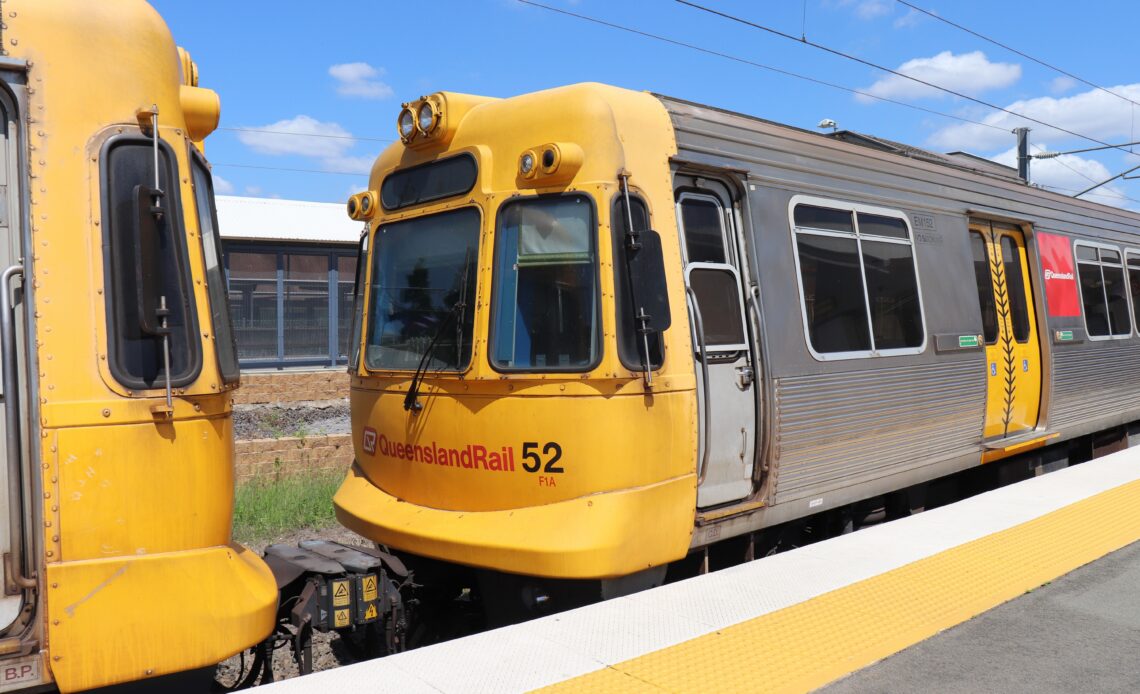
| Queensland Rail is building Australia’s first mission-critical private 5G rail network to support digital train control and next-generation signaling. The deployment provides the communications foundation for European Train Control System Level 2 technology, connecting Brisbane and the Sunshine Coast in time for the 2032 Olympic and Paralympic Games. |
Queensland Rail has selected Ericsson to design, supply, integrate, test and commission a mission-critical private 5G network for Sector 1 North of the South-East Queensland rail network. The deployment forms part of Stage 1 of The Wave, the transformative public transport and rail infrastructure program being delivered to connect Brisbane and the Sunshine Coast. The Digital Radio System will be operational on the Sunshine Coast line ahead of passenger services supporting the Brisbane 2032 Olympic Games, scheduled to run from 23 July to 8 August, with the Paralympic Games following from 24 August to 5 September.
The network will operate in Band n101 in the 1900 MHz spectrum and includes a mission-critical private 5G Radio Access Network along with a geographically redundant 5G Core network and cloud infrastructure, provided by Ericsson’s Integrated Core Solution. This deployment marks a significant milestone for digital rail transformation in Australia, establishing a reference architecture for mission-critical 5G in passenger rail applications. The platform is designed to support interoperability requirements where Queensland’s metropolitan rail network interfaces with the National Network for Interoperability.
| Metric | Detail |
| Network type | Mission-critical private 5G with geographically redundant core |
| Spectrum | Band n101, 1900 MHz |
| Coverage | Sector 1 North of South-East Queensland rail network, Sunshine Coast line |
| Vendor(s) | Ericsson (RAN and core), UGL Transport, Frequentis |
| Operator | Queensland Rail with Department of Transport and Main Roads |
| Timeline | Operational ahead of Brisbane 2032 Olympics (July-August 2032) |
| Related investment | Part of €214M (AUD $354M) Stage 1 Wave contract |
Queensland Rail’s Operating Environment and Digital Transformation Imperative
Queensland Rail operates a complex metropolitan and regional passenger rail network serving South-East Queensland, one of Australia’s fastest growing regions. The Sunshine Coast corridor represents a key artery connecting coastal communities to Brisbane, with demand projected to surge as the region prepares to host the 2032 Olympic and Paralympic Games. The existing communications infrastructure, based on legacy analog radio systems, cannot support the data-intensive, real-time digital train control capabilities required for modern rail operations.
The Digital Radio System project forms one of four major work packages within the Department of Transport and Main Roads’ broader procurement activity for Stage 1 of The Wave. This transformative infrastructure program aims to increase network capacity, improve safety and enable operational efficiency improvements across Queensland’s rail network. The scale of the challenge is substantial, requiring a communications platform capable of supporting mission-critical voice and data services, digital signaling, and automatic train control functions across hundreds of route kilometers. The deployment parallels other mission-critical Ericsson infrastructure projects where reliability and redundancy are paramount operational requirements.
Technical Architecture and Spectrum Strategy
The private 5G network leverages Band n101 in the 1900 MHz spectrum, a frequency allocation specifically designated for railway communications in line with Future Railway Mobile Communications System standards. This spectrum choice aligns with international railway communication trends, mirroring deployments such as Deutsche Bahn’s test track implementation that also utilizes the n101 band. The 1900 MHz frequency provides favorable propagation characteristics for linear railway corridors, balancing coverage range with capacity requirements.
Ericsson’s solution comprises two primary infrastructure layers. The Radio Access Network provides cellular coverage along the rail corridor, with cell sites positioned to ensure continuous connectivity for moving trains at operational speeds. The geographically redundant 5G Core network, delivered through Ericsson’s Integrated Core Solution, provides resilience against single points of failure. Cloud infrastructure hosts the core network functions, enabling elastic scaling and centralized management. This architecture supports Mission Critical Services capabilities including mission-critical push-to-talk, data and video communications. The platform is engineered to provide the fail-over, self-healing and low-latency characteristics essential for safety-critical rail operations, similar to infrastructure supporting industrial automation and real-time control applications.
European Train Control System Integration
The private 5G network provides the communications foundation to support rollout of European Train Control System Level 2, a next-generation signaling technology that enables continuous digital train control being delivered by Alstom. Alstom secured the first €69 million (AUD $114 million) tranche of a €214 million (AUD $354 million) contract by the Queensland Government for Stage 1 of The Wave project. ETCS Level 2 replaces traditional lineside signals with continuous cab signaling, where train location, speed and movement authority are communicated digitally between trackside equipment and onboard computers.
This signaling approach requires a highly reliable, low-latency communications bearer network capable of transmitting safety-critical control data in real time. The 5G infrastructure must meet stringent availability, latency and integrity requirements defined in railway safety standards. UGL Transport, Ericsson and Frequentis will deliver the first operational section of the Digital Radio System to the Sunshine Coast line, integrating the communications layer with Alstom’s ETCS equipment to create an end-to-end digital train control system. The technology is designed to improve safety by eliminating signal sighting errors, increase network capacity by enabling closer train spacing, and enhance operational efficiency through dynamic route management.
| “This is a significant moment for digital rail in Australia. Ericsson’s mission-critical private 5G platform will underpin Queensland’s next-generation rail communications network, supporting safer operations and enabling the introduction of European Train Control System Level 2 digital train control. We are proud to be part of the team delivering this critical infrastructure for Queensland and for the Brisbane 2032 Olympic and Paralympic Games.” Ludvig Landgren, Head of Ericsson, Australia and New Zealand |
| “Alstom’s ETCS Level 2 system is a globally proven, interoperable platform deployed across thousands of kilometres of railway in more than 35 countries, enabling operators to maximise capacity, safety and network efficiency through continuous digital train control.” Ling Fang, Asia-Pacific Region President, Alstom |
| “As Queensland prepares to host the 2032 Olympics and Paralympic games, Alstom is proud to bring its global digital signalling leadership to support the transformation of the State’s rail network. This project brings together Alstom’s globally proven ETCS technology with our strong local presence in Queensland to support a safer, more efficient and future-ready transport system.” Guillaume Tritter, Managing Director, Alstom Australia and New Zealand |
Multi-Vendor Partnership and Delivery Model
The Queensland Rail deployment exemplifies the complex multi-vendor partnerships required for modern rail infrastructure projects. Ericsson provides the private 5G communications infrastructure, UGL Transport contributes rail engineering expertise and system integration capabilities, and Frequentis supplies mission-critical communications systems. Alstom delivers the ETCS Level 2 signaling platform that utilizes the 5G bearer network. This collaborative model distributes specialized expertise across partners while requiring tight integration and interface management.
The Department of Transport and Main Roads oversees procurement and program governance for Stage 1 of The Wave, coordinating the various work packages to ensure cohesive delivery. Queensland Rail operates the existing network and will transition to the new digital systems once commissioned. This partnership structure reflects industry best practices for large-scale rail modernization programs, where network operators leverage specialized vendor capabilities while retaining operational control. The approach enables technology transfer and builds local capability for ongoing support and future network evolution.
Future Railway Mobile Communications System Pathway
The private 5G platform is designed to provide a pathway toward Future Railway Mobile Communications System capabilities, the next-generation global standard for railway communications being developed to succeed GSM-R systems deployed across Europe and other regions. FRMCS will standardize railway communications on 5G technology, supporting enhanced mobile broadband, mission-critical services and network slicing to isolate different application traffic types. Queensland Rail’s network architecture, utilizing the designated n101 railway band and 5G core infrastructure, positions the operator to adopt FRMCS capabilities as the standard matures and equipment becomes commercially available.
This forward-looking approach protects the substantial infrastructure investment by ensuring compatibility with emerging international standards. The deployment demonstrates how rail operators can modernize legacy communications while building a foundation for future capabilities. Global spending on private cellular networks for railways is expected to grow at a compound annual growth rate of 23 percent over the next three years, driven by operators worldwide pursuing similar digital transformation initiatives. Queensland Rail’s implementation provides a reference model for other Australian and Asia-Pacific railway operators evaluating private 5G strategies.
Global Rail Private Network Context
Queensland Rail’s deployment sits within a broader global trend of railway operators adopting private cellular networks to support digital train control and mission-critical communications. Western Australia’s Public Transport Authority is installing a purpose-built 3GPP network with approximately 160 cell sites to replace its existing 400 MHz analog radio system. In India, the National Capital Region Transport Corporation deployed a 700 MHz private LTE network for the Delhi Meerut Regional Rapid Transit System supporting mission-critical communications and ETCS Level 2 and 3 signaling as well as automatic train operation.
European operators have also embraced private cellular technology. Deutsche Bahn deployed the world’s first commercial 5G standalone radio network in the 1900 MHz n101 band at its test track, validating FRMCS requirements including fail-over and low-latency capabilities. France’s Société du Grand Paris deployed a 2.6 GHz LTE network across metro stations, lines and depots. In China, multiple metro operators including Shentong Metro, Guangzhou Metro and Shenzhen Metro have adopted hybrid public-private 5G networks. The United Kingdom is deploying standalone 5G networks along the East West Rail corridor through the Connected Heartland Railways program. These parallel deployments validate the technical approach and demonstrate global railway industry confidence in private cellular networks as the foundation for next-generation rail operations.
| KEY INSIGHT Queensland Rail’s private 5G deployment demonstrates that mission-critical rail communications require purpose-built infrastructure using dedicated railway spectrum, geographically redundant core networks and tight integration with digital signaling systems. Operators planning similar transformations should prioritize FRMCS alignment and multi-vendor partnership models to protect investment and enable future capability evolution. |
Related Reading
- UK Ministry of Defence Private 5G Framework: Ericsson Wins Role in £8 Billion RM6393 Tactical Communications Upgrade Through 2034
- Deutsche Telekom and Ericsson Bring Private 5G to Hamburg’s Container Terminal Altenwerder
Frequently Asked Questions
Q1: What spectrum does Queensland Rail’s private 5G network use?
The network operates in Band n101 at 1900 MHz, a frequency allocation designated for railway communications that aligns with Future Railway Mobile Communications System standards and provides favorable propagation characteristics for linear rail corridors.
Q2: Why is private 5G required for European Train Control System Level 2?
ETCS Level 2 replaces lineside signals with continuous digital train control, requiring a highly reliable, low-latency communications bearer to transmit safety-critical control data in real time between trackside equipment and onboard computers meeting stringent railway safety standards.
Q3: What is The Wave infrastructure program?
The Wave is Queensland’s transformative public transport and rail infrastructure program connecting Brisbane and the Sunshine Coast. The Digital Radio System forms one of four major work packages within Stage 1 procurement, supporting services ahead of the 2032 Olympics.
Q4: Which vendors are involved in the Queensland Rail deployment?
Ericsson provides the private 5G RAN and core infrastructure. UGL Transport and Frequentis partner on Digital Radio System delivery. Alstom supplies the ETCS Level 2 signaling platform. The Department of Transport and Main Roads oversees procurement governance.
Q5: How does this network support Future Railway Mobile Communications System?
The network uses the designated n101 railway band and 5G core infrastructure architected to provide a pathway toward FRMCS capabilities, protecting infrastructure investment and enabling adoption of enhanced features as the global railway standard matures.
Q6: What rail capacity and safety benefits does digital train control provide?
Digital train control eliminates signal sighting errors, increases network capacity through closer train spacing enabled by continuous position monitoring, and enhances operational efficiency via dynamic route management. Alstom’s ETCS platform is deployed across thousands of kilometers in over 35 countries.