

Vertical: Electric Utility
Application: Grid modernization, field device connectivity, Zero Trust security, SIM lifecycle management, workforce communications
Ecosystem: Ericsson, OneLayer, Burns & McDonnell, Anterix
Private Network: Private LTE
| Tampa Electric becomes one of the first investor-owned utilities to deploy a private LTE network for operational grid use. With Ericsson infrastructure, OneLayer security, and Burns & McDonnell integration, the Florida utility is building a 40-year mission-critical platform to connect tens of thousands of devices across its 2,000-square-mile service territory. |
Tampa Electric Company (TECO) has selected Ericsson, OneLayer, and Burns & McDonnell to deploy, manage, and secure its private LTE network across West Central Florida, positioning itself as one of the first investor-owned utilities in the United States to implement a mission-critical private cellular network for full operational use. The deployment combines Ericsson’s LTE infrastructure with OneLayer’s Bridge platform for device management and Zero Trust security, while Burns & McDonnell brings utility-specific operational technology integration expertise to align the network with existing systems.
The network operates on Anterix’s 900 MHz spectrum under a 40-year licensing agreement covering approximately 2,000 square miles of service territory. Tampa Electric has committed to a $34.5 million prepayment for the initial 20-year term, with options for two additional 10-year extensions. The utility plans to deploy tens of thousands of devices over the next five years, with several thousand targeted for the initial phase and more than 10,000 devices expected by 2030. This represents a strategic investment in grid resilience and self-healing network capabilities for the utility’s customer base.
| Metric | Detail |
| Network type | Private LTE (Mission Critical Network) |
| Spectrum | Anterix 900 MHz band, 6 MHz exclusive use |
| Coverage | Approximately 2,000 square miles, West Central Florida |
| Devices | Tens of thousands planned over five years; 10,000+ by 2030 |
| Vendor(s) | Ericsson (infrastructure), OneLayer (security/management), Burns & McDonnell (integration) |
| Spectrum agreement | 40-year term (20-year initial + two 10-year options) |
| Investment | $34.5 million spectrum prepayment for initial 20-year term (due mid-2025) |
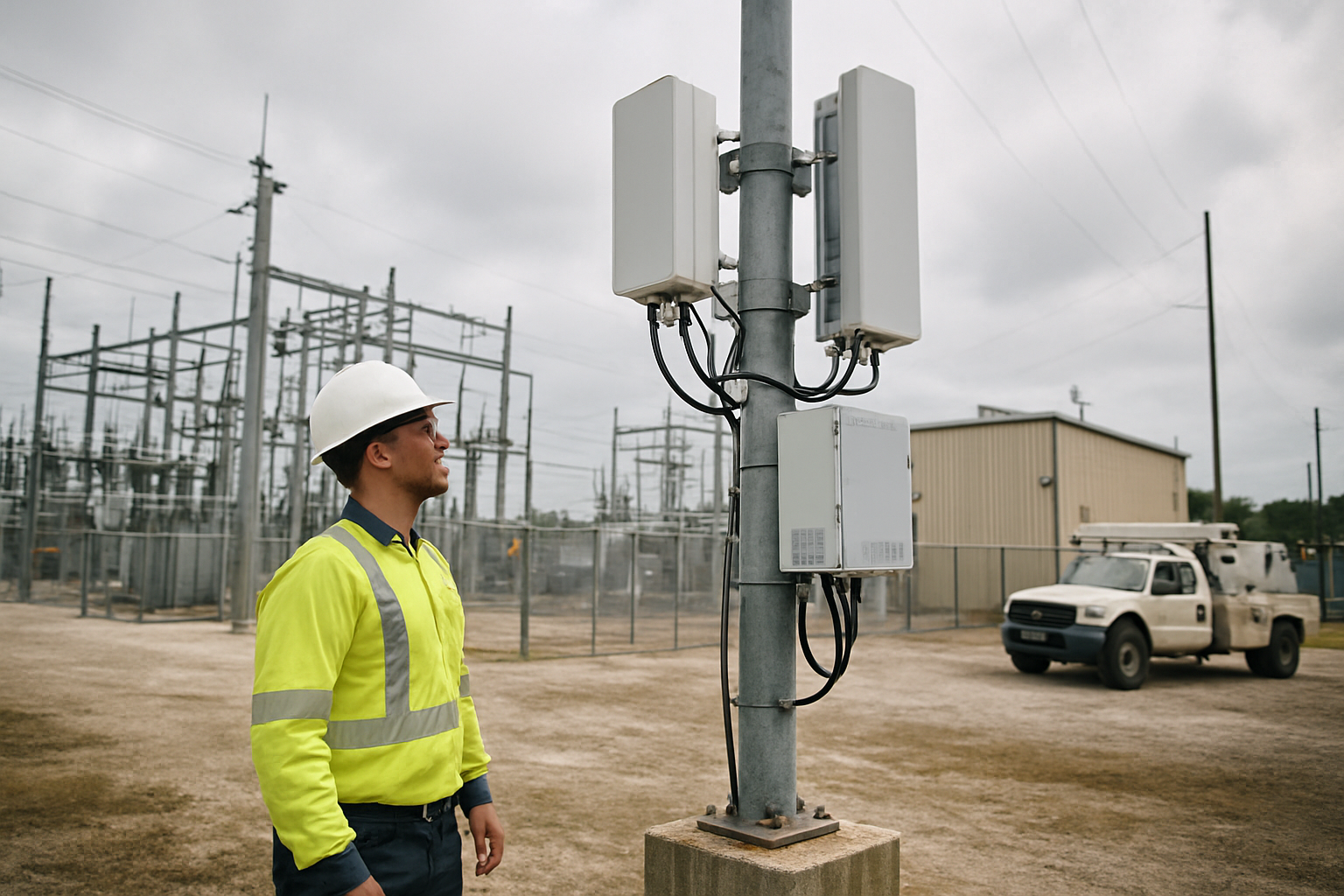
Grid Modernization Demands Drive Private Cellular Investment
Tampa Electric’s decision to build a private LTE network stems from the operational demands of modern grid management, where real-time communication with field devices such as reclosers, line sensors, and capacitor bank controllers is critical for system resilience and customer service. Traditional communication methods lack the reliability, security, and bandwidth necessary to support the utility’s vision for a self-healing electricity network capable of automatically detecting and rerouting power around faults or outages.
The utility operates in a challenging environment where hurricanes and severe weather events regularly test infrastructure resilience. A private, dedicated network eliminates dependence on commercial cellular services that may become congested or unavailable during emergencies. By controlling its own spectrum and infrastructure, Tampa Electric gains guaranteed network availability for mission-critical applications. The 900 MHz band provides superior propagation characteristics for wide-area coverage, reducing the number of cell sites required while delivering reliable connectivity across both urban and rural portions of the service territory. Similar approaches have been adopted in other sectors facing reliability requirements, including defense communications infrastructure where mission-critical connectivity cannot depend on public networks.
Technical Architecture and Equipment Selection
Tampa Electric’s Mission Critical Network is built on Ericsson’s LTE technology, selected for its proven track record in utility deployments and its native compatibility with future 5G evolution. Ericsson’s mission-critical network solutions are built on standard 3GPP LTE and 5G portfolio components, providing a clear migration path as bandwidth and latency requirements grow. The architecture supports a range of operational applications including grid protection, field workforce communications, and sensor connectivity across the distribution network.
The network’s security and management layer comes from OneLayer’s Bridge platform, which provides comprehensive SIM lifecycle management, device onboarding, and real-time visibility into every cellular-connected device across Tampa Electric’s operational infrastructure. Key capabilities include network segmentation to isolate different device types and applications, automated provisioning workflows to streamline deployment of new endpoints, geofencing to restrict device connectivity to authorized locations, and integration with existing security and network monitoring tools. This approach mirrors best practices seen in other critical infrastructure sectors, including managed private networks at ports where operational technology security is paramount.
Burns & McDonnell serves as the systems integrator, responsible for aligning the private LTE deployment with Tampa Electric’s existing operational technology environment, SCADA systems, and utility workflows. The firm brings deep expertise in utility network infrastructure and understands the unique requirements of electric distribution automation, ensuring the private network complements rather than disrupts established operational processes.
Device Management and Zero Trust Security at Scale
Managing tens of thousands of connected devices across a utility network presents operational and security challenges that differ significantly from enterprise IT environments. Tampa Electric’s field devices operate in harsh conditions, have long service lives, and require security policies that account for the unique characteristics of operational technology. OneLayer’s platform addresses these challenges by providing granular visibility and control over every connected endpoint, enabling Tampa Electric to implement Zero Trust security principles where no device is inherently trusted and every connection is verified.
The Bridge platform automates many aspects of device lifecycle management that would otherwise require manual intervention by network operations staff. SIM provisioning, device authentication, and policy enforcement happen automatically as new devices are deployed, reducing the administrative burden and minimizing configuration errors. Real-time monitoring provides immediate alerts when devices exhibit anomalous behavior, attempt to connect from unexpected locations, or violate established security policies. This capability is particularly valuable in a utility context where compromised field devices could potentially impact grid operations or customer service.
| “Utilities making long-term investments in private LTE infrastructure need the security architecture and operational tools to support it at scale. The work Tampa Electric and Burns & McDonnell have done here is a strong example of how utilities are approaching private cellular deployments thoughtfully, selecting partners and technology that fit how their teams actually operate.” Drew Ganther, VP Sales, OneLayer |
| “Tampa Electric has approached its private LTE buildout with a level of operational discipline that sets it apart from most utilities we work with. Selecting the right device management and security platform at this stage of the deployment is exactly the kind of decision that determines whether a network scales cleanly or creates operational debt down the road.” Daniel Bayouth, PE, Director of Networks & Wireless, Burns & McDonnell |
Spectrum Economics and Long-Term Network Control
Tampa Electric’s 40-year spectrum agreement with Anterix represents a strategic commitment to long-term network ownership and control. The $34.5 million prepayment for the initial 20-year term, scheduled for completion by mid-2025, provides exclusive use of 6 MHz of broadband spectrum in the 900 MHz band across the utility’s entire service territory. This investment provides predictable connectivity costs over decades, avoiding the recurring charges and service uncertainty associated with commercial cellular network subscriptions.
The agreement structure, with options to extend for two additional 10-year periods, aligns with the long asset lifecycles typical of utility infrastructure. Grid automation devices, distribution monitoring equipment, and communications infrastructure often remain in service for 20 to 30 years or longer. Securing spectrum rights for a comparable timeframe ensures network availability throughout the operational life of connected devices. The 900 MHz band’s propagation characteristics also reduce total cost of ownership by requiring fewer cell sites to achieve comparable coverage versus higher-frequency alternatives. Utilities across North America have converged on similar economic models, with Evergy paying $30.2 million for its 20-year Anterix lease and other major utilities pursuing comparable agreements.
Industry Context and Utility Private Network Adoption
Tampa Electric’s deployment positions the utility among a growing cohort of North American electric companies investing in private LTE infrastructure for grid modernization. The Lower Colorado River Authority in Texas has signed a multi-year agreement with Ericsson for private LTE across parts of 68 counties, with initial operations beginning in early 2025. Evergy is building an LTE network across roughly 100 sites in Kansas and Missouri, potentially covering 49,000 square miles or 80 percent of its service area. Xcel Energy has committed to a 20-year Anterix license for deployment across eight states, while Avangrid, San Diego Gas & Electric, Ameren, and the New York Power Authority are in various stages of testing or deployment.
This wave of utility private network adoption reflects a broader industry recognition that grid modernization requires dedicated, secure, high-reliability communications infrastructure. Southern Company pioneered utility private LTE with Southern Linc’s 4G network built in 2016, demonstrating long-term viability. The common pattern across recent deployments includes use of Anterix 900 MHz spectrum, 20-year licensing agreements, partnerships with major equipment vendors such as Ericsson and Nokia, and plans to support thousands to tens of thousands of connected devices. Tampa Electric’s deployment fits this pattern while distinguishing itself through comprehensive upfront integration of advanced device management and Zero Trust security capabilities.
Future Evolution and 5G Migration Path
While Tampa Electric’s initial deployment is based on LTE technology, the network architecture provides a clear path to 5G evolution as operational requirements and use cases mature. Ericsson’s mission-critical network solutions are built on the same 3GPP standards that underpin commercial 5G networks, enabling software upgrades and equipment additions rather than wholesale infrastructure replacement when 5G capabilities become necessary. This approach protects Tampa Electric’s capital investment while ensuring the network can support future applications that may require 5G’s enhanced mobile broadband, ultra-reliable low-latency communications, or massive machine-type communications capabilities.
The ability to evolve to 5G positions Tampa Electric to support emerging utility use cases including advanced distribution automation with sub-second response times, high-definition video from field crews and inspection drones, augmented reality applications for maintenance and training, and dense sensor deployments for granular grid monitoring. The initial LTE deployment establishes the foundational infrastructure, operational processes, and organizational expertise necessary to operate a private cellular network, while the architecture ensures Tampa Electric is not locked into legacy technology as requirements grow. This forward-looking approach contrasts with utilities that have deployed proprietary wireless technologies with limited upgrade paths, and aligns with best practices in sectors such as manufacturing where standards-based networks enable long-term technology evolution.
| KEY INSIGHT Tampa Electric’s deployment demonstrates that successful utility private LTE implementations require more than infrastructure hardware. Integrating comprehensive device management, Zero Trust security, and operational technology expertise at the deployment’s outset creates a foundation for scaling to tens of thousands of endpoints without accumulating technical debt or security gaps. |
Related Reading
- UK Ministry of Defence Private 5G Framework: Ericsson Wins Role in £8 Billion RM6393 Tactical Communications Upgrade Through 2034
- Oman’s First Managed Private 5G Network at Port of Salalah
- TERAGO and Ericsson Deploy Private 5G in Canada at MMRI
- Deutsche Telekom and Ericsson Bring Private 5G to Hamburg’s Container Terminal Altenwerder
Frequently Asked Questions
Q1: What spectrum does Tampa Electric’s private LTE network use?
Tampa Electric operates on Anterix’s 900 MHz band with exclusive use of 6 MHz of spectrum across its approximately 2,000-square-mile service territory in West Central Florida under a 40-year licensing agreement.
Q2: How many devices will Tampa Electric connect to its private LTE network?
Tampa Electric plans to deploy tens of thousands of devices over the next five years, with several thousand in the initial deployment phase and more than 10,000 devices expected by 2030.
Q3: What roles do OneLayer and Burns & McDonnell play in this deployment?
OneLayer provides the Bridge platform for SIM lifecycle management, device visibility, and Zero Trust security. Burns & McDonnell serves as systems integrator, aligning the network with Tampa Electric’s existing operational technology and utility workflows.
Q4: Why did Tampa Electric choose private LTE instead of commercial cellular service?
Private LTE provides guaranteed network availability for mission-critical grid operations, eliminates dependence on potentially congested commercial networks during emergencies, and offers predictable long-term costs aligned with utility infrastructure lifecycles.
Q5: Can Tampa Electric’s LTE network evolve to 5G in the future?
Yes. The network is built on Ericsson’s standard 3GPP LTE and 5G portfolio, providing a native migration path to 5G capabilities through software upgrades and equipment additions as operational requirements grow.
Q6: What grid applications will the private LTE network support?
The network will support grid protection, field workforce communications, and connectivity for operational devices including reclosers, line sensors, and capacitor bank controllers, enabling self-healing network capabilities and improved system resilience.