
Vertical: Sports Venues
Application: Live video transmission, wireless broadcasting, specialty camera feeds
Ecosystem: T-Mobile, Apple, Ericsson, Major League Baseball
Private Network: 5G
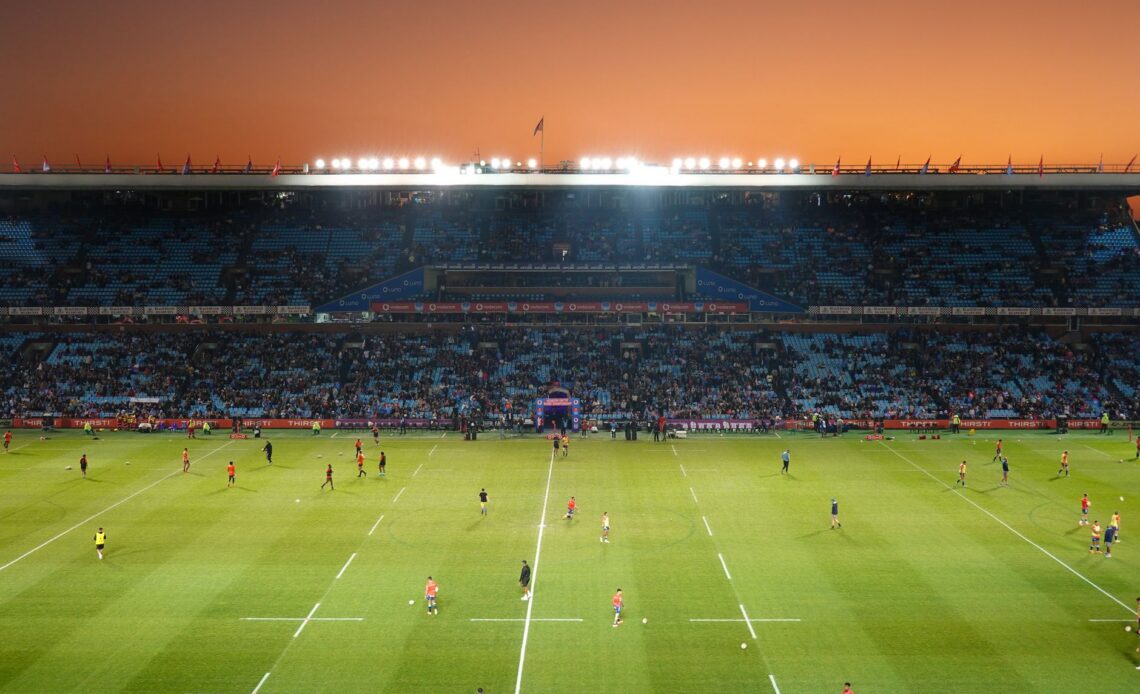
| Dedicated private 5G powers live broadcast cameras at major league ballpark. T-Mobile deployed an isolated wireless network at Dodger Stadium to transmit eight iPhone video feeds directly to broadcast control for Apple TV’s September 18, 2026 season finale. |
T-Mobile deployed a dedicated private 5G network at Dodger Stadium to support Apple TV’s most ambitious live sports broadcast using consumer smartphone technology. The system enabled eight iPhone 18 Pro devices embedded throughout the Los Angeles ballpark to transmit live video feeds over an isolated wireless network during the San Francisco Giants versus Los Angeles Dodgers game on Friday, September 18, 2026. The deployment represented a significant scaling from Apple’s initial four-camera test at Fenway Park the previous season.
The installation marked the convergence of consumer electronics and enterprise-grade private cellular infrastructure for professional broadcast production. By carving out dedicated spectrum capacity within the stadium, T-Mobile ensured predictable connectivity for the wireless camera feeds despite the presence of tens of thousands of fans accessing the operator’s public network in the same venue. The broadcast closed out Apple TV’s 2026 Friday Night Baseball schedule, reaching subscribers across 60 countries and regions.
| Metric | Detail |
| Network type | Private 5G standalone |
| Spectrum | N41 (2.5 GHz), 20 MHz dedicated |
| Devices | 8 iPhone 18 Pro cameras on private 5G (14 total in production) |
| Infrastructure | Ericsson EP5G core and Dot radios |
| Operator | T-Mobile |
| Go-live | September 18, 2026 |
| Deployment time | Approximately two days per stadium (29 US MLB stadiums completed over 18 months) |
Scaling Consumer Technology for Professional Broadcast
The Dodger Stadium production deployed 14 iPhone 18 Pro devices throughout the ballpark, significantly expanding from the four-unit proof-of-concept Apple conducted at Fenway Park in September 2025. Eight of the devices fed live game action directly into the broadcast control room over the isolated wireless network, while the remaining six were hand-carried by operators roaming the stadium floor as cinematic cameras. These mobile units captured pre-game batting practice, player walk-outs, dugout celebrations, and atmospheric shots without relying on the private network. The iPhone 18 Pro features a new 48-megapixel Fusion Main camera with variable aperture, along with manual controls for parameters including white balance and shutter speed, providing broadcast teams with professional-grade capture capabilities in a compact form factor.
Apple embedded the eight network-connected iPhones in locations no traditional broadcast camera could occupy, including the pitch clock, backstop, foul pole, and both bullpens. This positioning strategy leveraged the smartphone’s diminutive size to deliver novel viewing angles impossible with conventional camera systems. The production represented a midpoint in Apple’s broadcast technology evolution, utilizing iPhones as specialty cameras supplementing traditional broadcast equipment rather than the complete replacement approach the company demonstrated with 15 iPhone 17 Pro devices for a Major League Soccer match between LA Galaxy and Houston Dynamo FC on May 23, 2026. That earlier deployment at Dignity Health Sports Park covered the soccer pitch exclusively with smartphone cameras.
Dedicated Spectrum Allocation and Network Architecture
T-Mobile allocated 20 megahertz of its N41 spectrum in the 2.5-gigahertz band specifically for Major League Baseball’s use at Dodger Stadium, carving it out from the operator’s public network spectrum resources. Each of the 29 US MLB stadiums where T-Mobile deployed private 5G infrastructure broadcasts a unique Public Land Mobile Network identifier, ensuring that only authorized MLB devices can connect. The network architecture prevents interference from tens of thousands of fans simultaneously using T-Mobile’s public network within the same venue, a critical requirement for mission-critical broadcast applications where dropped frames or latency spikes would be immediately visible to viewers.
The in-stadium network utilizes Ericsson Private 5G cores and Dot radios operating on n41 midband spectrum, with dedicated EP5G cores deployed at each ballpark. T-Mobile connected these systems directly to MLB’s existing infrastructure via stadium cabling that the league already owns and operates, minimizing installation time and complexity. Scott Jacka, Senior Director of Technology Development Strategy at T-Mobile, explained the architecture supporting a parallel automated officiating system at the same venue, stating the deployment uses “a dedicated, on-site 5G private network solution. The in-stadium networks are built using Ericsson’s EP5G and DOT radios on n41 spectrum so pitch data moves quickly, so decisions can be delivered and the game goes smoothly.” The public network within each stadium does not use the same n41 spectrum allocation, maintaining separation between consumer and production traffic.
Rapid Multi-Stadium Rollout Timeline
T-Mobile completed private 5G installations across all 29 US Major League Baseball stadiums over an 18-month period, with each individual ballpark deployment requiring approximately two days to complete. The accelerated timeline reflected the advantage of connecting to MLB’s pre-existing stadium infrastructure rather than installing entirely new cabling and mounting points. Mike Katz, President of Marketing, Strategy and Products at T-Mobile, emphasized the partnership’s scope, stating “At T-Mobile, every sports and entertainment partnership is about pushing the boundaries of innovation with our industry-leading 5G network and delivering more to our customers. That’s exactly what we’re doing by powering 5G-enabled ABS in Major League Baseball, demonstrating how our 5G network can support partners like MLB, in addition to giving our customers a front-row seat to all the baseball action this season with the return of free MLB.TV.”
The rapid deployment model contrasted with multi-year private network rollouts in rail infrastructure or utility-sector implementations spanning thousands of square miles. T-Mobile leveraged its partnership with MLB to standardize the installation process across venues, enabling the operator to complete 29 stadiums in the time many private network projects require for a single large facility. The National Baseball Hall of Fame recognized the technological milestone by adding an authenticated iPhone device to its permanent collection in Cooperstown, New York, cementing the deployment’s place in baseball broadcast history.
| “At T-Mobile, every sports and entertainment partnership is about pushing the boundaries of innovation with our industry-leading 5G network and delivering more to our customers. That’s exactly what we’re doing by powering 5G-enabled ABS in Major League Baseball, demonstrating how our 5G network can support partners like MLB, in addition to giving our customers a front-row seat to all the baseball action this season with the return of free MLB.TV.” Mike Katz, President of Marketing, Strategy and Products, T-Mobile |
Dual Private Networks in Single Venue
Dodger Stadium simultaneously operates two separate private 5G networks with distinct use cases, demonstrating the versatility of dedicated wireless infrastructure in high-density venues. While T-Mobile’s broadcast-focused network supports Apple TV’s iPhone camera feeds, a parallel private 5G system powers MLB’s Automated Ball-Strike system across all 29 US ballparks. The officiating network connects 12 high-speed, high-precision Hawk-Eye cameras positioned around each field, capturing pitch data and transmitting location verification via 5G-connected devices. Scott Jacka described the ABS system architecture, noting “Major League Baseball owns the infrastructure on site at each ballpark. They’ve got 12 Hawk-Eye cameras that go around the park. Those all connect back to a centralized room in the stadium. There’s processing happening locally, and there are operators running the game of baseball who are connected up in the press box.”
The dual-network approach avoided resource contention by allocating separate spectrum and processing capacity to each application. The ABS system requires ultra-reliable low-latency connectivity to deliver challenge rulings quickly enough to maintain game flow, while the broadcast network prioritizes sustained throughput for eight simultaneous high-definition video streams. This architecture mirrors strategies deployed in other sports venues where private 5G supports multiple concurrent use cases, from live broadcasting to operational communications.
Predictable Connectivity for Live Production
The private 5G deployment addressed a fundamental challenge in wireless broadcast production: ensuring predictable network performance in a venue packed with tens of thousands of spectators. By dedicating wireless network capacity to the production rather than relying on public cellular connectivity, T-Mobile and Apple designed the workflow to provide consistent connectivity for eight wireless iPhone feeds operating throughout Dodger Stadium. This approach eliminated the unpredictable congestion and handoff disruptions that would occur if the production cameras competed for resources on the public network, where user demand spikes unpredictably during key moments like home runs or controversial plays.
The unique PLMN identifier broadcast by each stadium’s private network ensures device-level access control, requiring explicit provisioning for any equipment connecting to the system. This security model prevents unauthorized access while enabling seamless roaming for authorized devices as camera operators move through the venue. The architecture builds on enterprise private wireless deployments in commercial real estate and transportation hubs, where managed connectivity supports mission-critical operations alongside high public traffic density. For broadcast teams, the dedicated capacity translates to frame-accurate synchronization and minimal latency, critical requirements when cutting between traditional cameras and the supplementary iPhone feeds during live production.
| “Major League Baseball owns the infrastructure on site at each ballpark. They’ve got 12 Hawk-Eye cameras that go around the park. Those all connect back to a centralized room in the stadium. There’s processing happening locally, and there are operators running the game of baseball who are connected up in the press box.” Scott Jacka, Senior Director of Technology Development Strategy, T-Mobile |
Global Broadcast Reach and Subscription Model
Apple TV distributed the Dodger Stadium broadcast to subscribers across 60 countries and regions without local broadcast restrictions, leveraging the service’s global licensing agreements. The Friday Night Baseball package costs $14.99 per month as a standalone subscription, with discounted access available through the Apple One bundle that combines multiple Apple services. The international distribution model contrasts with traditional regional sports networks, where geographic blackout restrictions frequently prevent fans from accessing games. The September 18 matchup began at 7:15 p.m. Pacific Time, closing out Apple TV’s 2026 Friday Night Baseball schedule with a marquee Giants-Dodgers rivalry game captured using the most extensive iPhone camera deployment in baseball broadcast history.
The subscription economics reflect Apple’s broader strategy of using exclusive live sports content to drive recurring revenue and ecosystem lock-in. By demonstrating iPhone’s viability as a broadcast tool on a global stage, Apple simultaneously promoted its consumer hardware while validating the device’s professional capabilities. This dual-purpose approach differentiates Apple from traditional broadcast equipment vendors, creating a feedback loop where consumer sales fund production technology development and vice versa. The Dodger Stadium deployment served as a capstone demonstration for the 2026 season, showcasing the maturity of both the iPhone 18 Pro’s imaging capabilities and T-Mobile’s private 5G infrastructure supporting mission-critical wireless applications in high-traffic venues.
Industry Context and Comparable Deployments
The Dodger Stadium private 5G broadcast network follows a growing pattern of sports venues deploying dedicated wireless infrastructure for live production. The T-Mobile rollout across 29 MLB stadiums represented a large-scale commercial implementation spanning an entire professional sports league. The standardized deployment model enabled by MLB’s consistent infrastructure across venues contrasts with ad-hoc mobile network deployments for emergency response or vehicle-integrated systems for rapid field operations, demonstrating how venue consistency accelerates private network adoption.
| KEY INSIGHT The Dodger Stadium deployment demonstrates that private 5G has matured from proof-of-concept trials to production-ready infrastructure supporting live broadcast workflows in high-density venues. By dedicating spectrum and processing capacity to mission-critical applications, operators can deliver predictable performance even when tens of thousands of users simultaneously access public networks in the same facility, unlocking new broadcast techniques impossible with traditional wired cameras. |
Related Reading
- Private 5G Network for European Athletics: Neutral Wireless Powers Live Broadcasting at Birmingham 2026
- Private 5G Network at Minneapolis-St. Paul Airport: Ericsson, Insight Enterprises Deploy System
- Comcast Business Private Wireless Network Deployment at Smartlink Headquarters: CBRS and Neutral Host Platform Replaces Legacy DAS in Downtown Annapolis
- Port of Santos Private 5G Network Integrates VTMIS, Digital Twin for Smart Port Operations in Brazil
- Tampa Electric Private LTE Network Deployment with Ericsson, OneLayer, and Burns & McDonnell Secures Mission-Critical Grid Communications Across 2,000 Square Miles of Florida Territory
- Private 5G Network for Rail: Queensland Rail and Ericsson Build ETCS Infrastructure
Frequently Asked Questions
Q1: How many iPhone cameras did Apple TV deploy at Dodger Stadium for the broadcast?
Apple TV deployed 14 iPhone 18 Pro cameras at Dodger Stadium, with eight transmitting live video over T-Mobile’s private 5G network and six operated as handheld cinematic cameras without network connectivity.
Q2: What spectrum does T-Mobile use for the Dodger Stadium private 5G broadcast network?
T-Mobile allocated 20 megahertz of N41 spectrum in the 2.5-gigahertz band exclusively for MLB use, carving it out from public network resources to ensure predictable performance for broadcast cameras.
Q3: How long did it take T-Mobile to install private 5G at each MLB stadium?
T-Mobile completed installations in approximately two days per stadium, deploying private 5G infrastructure across all 29 US MLB ballparks over an 18-month period by leveraging existing league-owned infrastructure.
Q4: Where were the network-connected iPhone cameras positioned at Dodger Stadium?
The eight network-connected iPhones were embedded in locations including the pitch clock, backstop, foul pole, and both bullpens, providing angles impossible with traditional broadcast cameras due to size constraints.
Q5: Does Dodger Stadium operate multiple private 5G networks simultaneously?
Yes, Dodger Stadium operates two separate private 5G networks: one supporting Apple TV’s broadcast cameras and another powering MLB’s Automated Ball-Strike system with 12 Hawk-Eye cameras transmitting officiating data.
Q6: What infrastructure vendor supplied equipment for the MLB private 5G deployment?
Ericsson supplied the Private 5G cores and Dot radios operating on n41 midband spectrum, with dedicated EP5G cores deployed at each ballpark and connected to MLB’s existing stadium infrastructure.