
Vertical: Live sports broadcasting and media production
Application: Live event production, 5G monowheel camera connectivity, rights holder content creation, broadcast-grade video transmission, guaranteed bandwidth for media coverage
Ecosystem: Neutral Wireless, Actua Sports, European Athletics, Alexander Stadium, BBC Sport
Private Network: Private 5G
| Live sport broadcasting reached a new milestone in Birmingham. Neutral Wireless deployed a private 5G network serving over 500 rights holder personnel across two venues, demonstrating how dedicated spectrum can replace traditional RF for agile camera systems and guarantee connectivity when public networks saturate. |
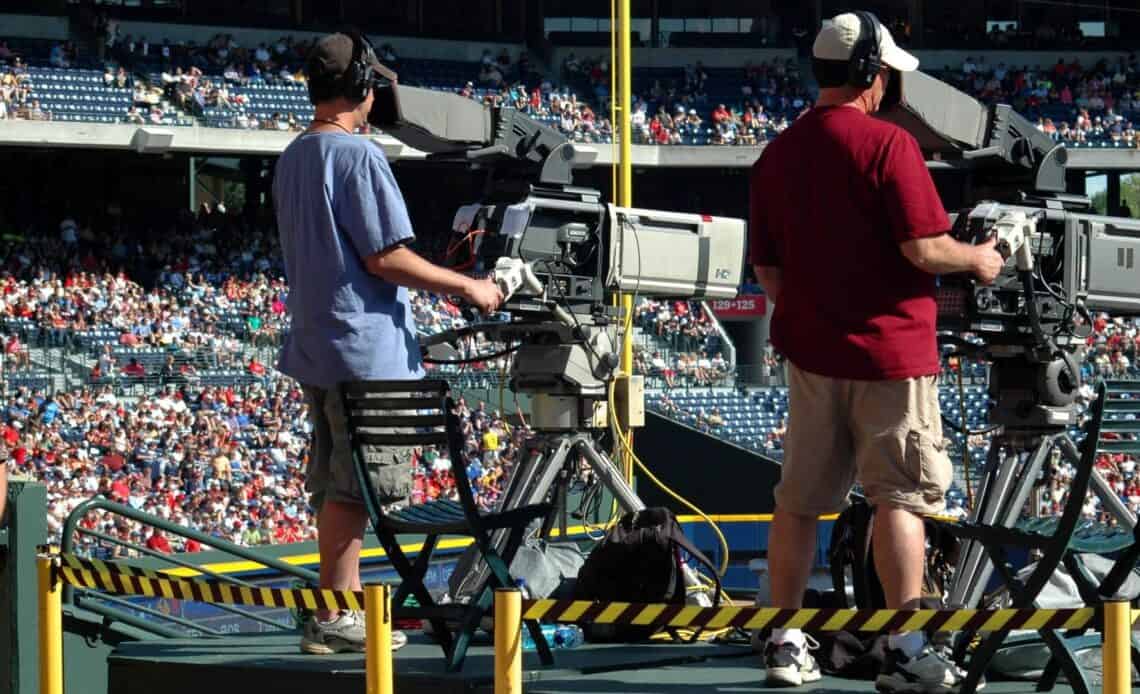
When the European Athletics Championships returned to Birmingham in August 2026, production teams faced a familiar challenge: delivering broadcast-quality coverage of race walks along a 1km city centre loop while supporting 40 television and radio outlets and more than 500 rights holder personnel at Alexander Stadium. This time, however, Neutral Wireless deployed a private 5G network that not only enabled monowheel cameras to replace traditional motorcycle-mounted rigs but also provided a connectivity lifeline for broadcasters who discovered mid-event that public networks could not meet their production demands.
The deployment, which ran from August 10 to 16, 2026, represents a significant evolution in private cellular for live sports. Rather than simply augmenting existing infrastructure, the network became a production tool in its own right, chosen deliberately over traditional broadcast RF for its flexibility and guaranteed performance. The six-cell system spanning the race walk course and stadium venue delivered the bandwidth and reliability that rights holders needed for interviews, warm-up coverage, and real-time content creation, validating the technology under the pressure of a major international championship.
| Metric | Detail |
| Network type | Private 5G |
| Sites / cells | 6 cells total: 4-cell system for race walk course, 2-cell server for Alexander Stadium |
| Coverage | 1km city centre race walk loop plus Alexander Stadium venue |
| Devices | Monowheel cameras, rights holder production equipment, broadcast devices |
| Vendor(s) | Neutral Wireless (network), Actua Sports (production partner) |
| Timeline | August 10 to 16, 2026 |
| Users supported | 40 TV and radio outlets, 500+ rights holder personnel |
Broadcasting Complexity at a Multi-Venue Championship
The European Athletics Championships presented unique production challenges that extended beyond the controlled environment of Alexander Stadium. Track and field events took place within the stadium’s established infrastructure, but the race walk competitions followed a 1km loop through Birmingham’s city centre, creating a mobile coverage requirement over public streets and infrastructure outside the venue footprint. For production partner Actua Sports, this distributed geography demanded a connectivity solution capable of supporting broadcast-grade video transmission across urban terrain while maintaining the agility to follow athletes along the entire course.
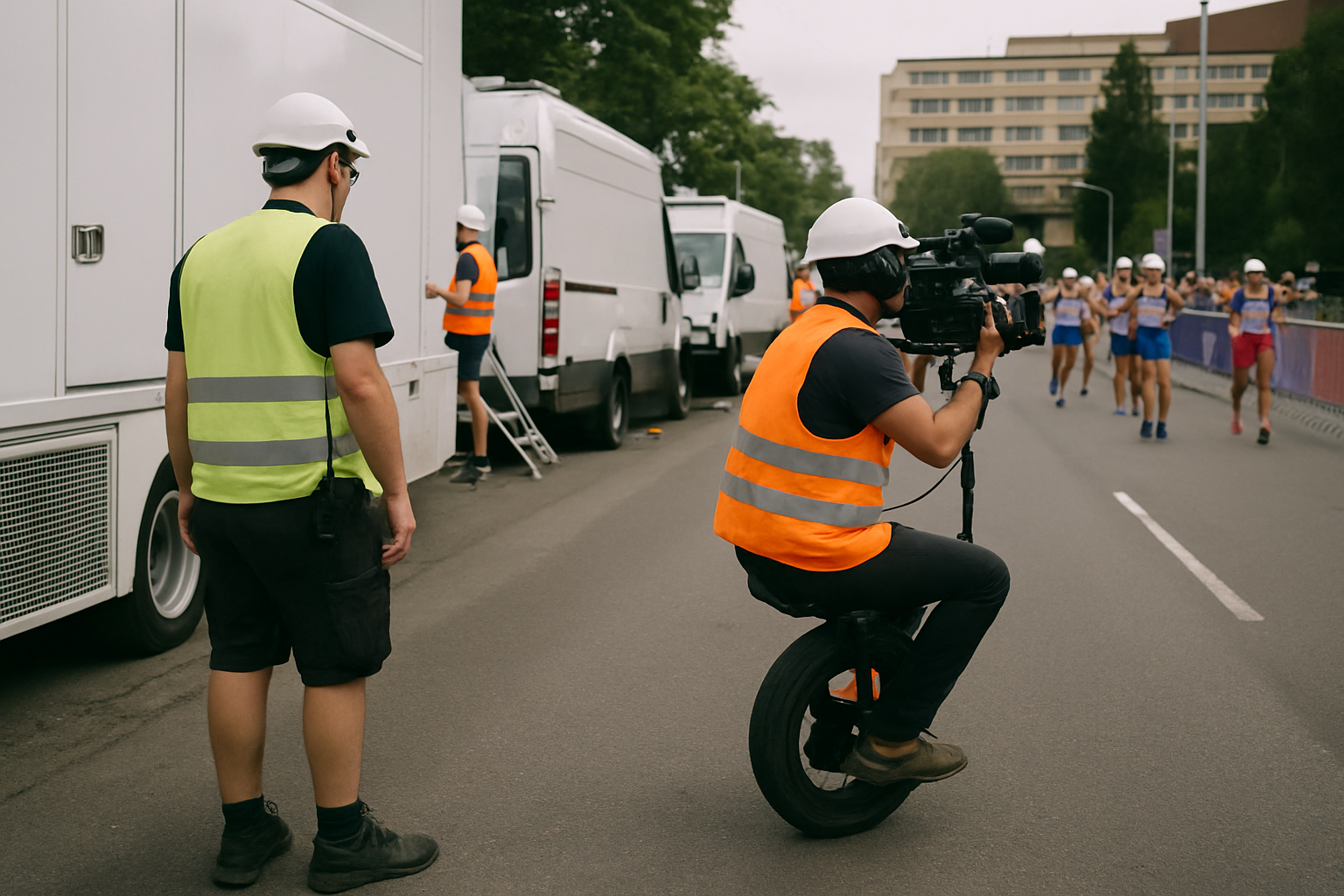
Traditional motorcycle-mounted cameras had long been the standard for race walk coverage, but their operational footprint, safety considerations, and limited manoeuvrability made them less than ideal for dense urban environments. Monowheel camera systems offered a lighter, more agile alternative, but they required reliable, high-bandwidth wireless connectivity to transmit video in real time. Frank Choquard, Director at Actua Sports, recognised that the event presented an opportunity to test private 5G as a production technology rather than simply a connectivity convenience. The decision to approach Neutral Wireless was driven by the need to explore whether dedicated spectrum could deliver the performance required for broadcast production in a challenging multi-venue environment.
From Concept to Six-Cell Deployment
Neutral Wireless designed a two-part network architecture tailored to the distinct requirements of each venue. For the 1km race walk course through Birmingham’s city centre, the team deployed a four-cell system to ensure continuous coverage as monowheel cameras tracked athletes around the loop. Meanwhile, Alexander Stadium received a server running two cells to provide connectivity for rights holders producing content, conducting interviews, and covering warm-ups and other stadium-based activities. This six-cell configuration represented what Damian Muir, Senior Sales Manager at Neutral Wireless, described as the second or third largest deployment the company had undertaken in terms of equipment volume.
Pre-deployment testing proved critical to the network’s success. Damian Muir explained that the team came to Birmingham earlier in 2026 to assess spectrum conditions in the area, ensuring that performance would meet broadcast requirements before committing to the full deployment. This advance reconnaissance, combined with lessons learned from previous large-scale events including Olympic Games coverage, enabled Neutral Wireless to anticipate potential issues and address them before the championships began. The team focused particularly on ensuring all units were updated in advance and that users understood technical details such as sound card slot configuration, smoothing the path for a complex multi-day live event.
| “We could have done it with traditional broadcast RF, or we could do it with private 5G. So we contacted Neutral Wireless and asked if they could create a dedicated 5G bubble, because we would like to explore this technology.” Frank Choquard, Director, Actua Sports |
| “We came and did a test earlier in the year as performance depends on how the spectrum is in the area.” Damian Muir, Senior Sales Manager, Neutral Wireless |
Organic Demand and Mid-Event Adoption
One of the most revealing outcomes of the Birmingham deployment was the organic demand for private 5G connectivity from rights holders who had not initially booked access. As the championships progressed, broadcasters and media organisations that were relying on public cellular networks encountered unstable connectivity that compromised their ability to produce content. Interview feeds dropped, warm-up coverage stuttered, and the guaranteed bandwidth they needed for real-time uploads proved elusive. Faced with these production challenges, several rights holders approached Neutral Wireless during the event to request access to the private network.
Frank Choquard observed that these mid-event requests validated the value proposition of dedicated spectrum for live sports broadcasting. Rights holders needed guaranteed bandwidth not only for primary broadcast feeds but also for supplementary content creation: interviews in the stands, athlete warm-up coverage, and behind-the-scenes material for digital platforms. Public networks, saturated by the concentration of 500 personnel and tens of thousands of spectators, could not deliver the reliability that production workflows demanded. The private 5G network, by contrast, provided the performance headroom that enabled broadcasters to meet their editorial commitments without worrying whether their connection would hold. This real-world proof point suggests that future events may see private cellular positioned not as a backup but as the primary connectivity layer for rights holder operations.
Monowheel Cameras Replace Motorcycle Rigs
The deployment of 5G-enabled monowheel cameras along the race walk course represented a practical innovation in live sports production. Traditional motorcycle-mounted camera systems, while effective, require trained drivers, carry safety risks in crowded urban environments, and lack the manoeuvrability to navigate tight spaces or capture close-up athlete perspectives. Monowheel cameras, by contrast, offer a smaller footprint, greater agility, and the ability to operate in pedestrian zones without the logistical complexity of a vehicle and crew. The challenge, however, has always been wireless connectivity: monowheel systems must transmit broadcast-quality video in real time as they move along the course, requiring both high bandwidth and seamless handoff between cells.
The four-cell private 5G network along Birmingham’s 1km race walk loop provided the connectivity foundation that made monowheel cameras viable. Each cell maintained coverage over a segment of the course, enabling cameras to maintain stable uplink connections as they tracked athletes around the loop. The guaranteed bandwidth and low latency of the private network ensured that video feeds reached production trucks without the dropouts or quality degradation that can occur on congested public networks. The success of this approach has broader implications for outdoor sports production, from marathon and cycling coverage to sailing and motor racing, where mobile camera systems must maintain connectivity across wide geographic areas. As other events explore private cellular for media production, the Birmingham deployment offers a proof point for how dedicated spectrum can enable new production techniques.
Leveraging Olympic Experience at Scale
Neutral Wireless brought significant operational experience to the Birmingham deployment, drawing on lessons learned from previous large-scale events including Olympic Games coverage. Damian Muir characterised the European Athletics Championships as one of the company’s largest deployments in terms of equipment volume, but noted that the technical challenge was manageable thanks to advance preparation and a disciplined approach to potential failure points. The team’s focus on pre-event testing, firmware updates, and user training reflected an understanding that live sports broadcasting leaves no room for mid-event troubleshooting.
This operational maturity is critical as private cellular moves from experimental deployments to production-critical infrastructure. The Birmingham network supported not only planned use cases, such as monowheel camera feeds, but also absorbed unplanned demand from rights holders who discovered mid-event that they needed guaranteed connectivity. That flexibility, combined with the network’s ability to deliver stable performance across six days of competition, demonstrates that private 5G for live events has moved beyond the proof-of-concept stage. The deployment offers a template for how event organisers, broadcasters, and network providers can collaborate to deliver connectivity that meets the demanding requirements of modern sports production.
Broader Implications for Live Event Connectivity
The Birmingham deployment sits within a growing body of evidence that private cellular networks are becoming essential infrastructure for live sports and entertainment events. Neutral Wireless has previously deployed private 5G for the Coronation of H.M. King Charles III, where over 60 devices from 20 international media outlets used the network along the Mall, and for London’s New Year’s Eve fireworks, where ITN and Haivision delivered a live broadcast using new n40 private 5G spectrum. Each deployment has refined the technical and operational playbook, demonstrating that dedicated spectrum can deliver the performance and reliability that public networks cannot guarantee in high-density, high-stakes environments.
The race walks at the 2026 European Athletics Championships may have captured headlines because María Pérez and Sofia Fiorini set world records, but the broadcasting infrastructure that delivered those moments to a global audience represents an equally significant milestone. As rights holders demand higher-quality content, more flexible production workflows, and the ability to create supplementary digital material in real time, the limitations of public cellular networks become increasingly apparent. Private 5G, as demonstrated in Birmingham, offers a pathway to guaranteed performance, enabling production teams to focus on storytelling rather than connectivity. This shift has implications not only for athletics but for any live event where reliable, high-bandwidth wireless connectivity is a production necessity, from music festivals and motor racing to outdoor ceremonies and multi-venue conferences.
| KEY INSIGHT The Birmingham deployment validates private 5G as production infrastructure rather than a connectivity convenience, with mid-event demand from rights holders demonstrating that guaranteed bandwidth is becoming essential for live sports broadcasting. Event organisers should consider dedicated spectrum not as an optional enhancement but as foundational infrastructure for modern multi-venue productions. |
Frequently Asked Questions
Q1. What scale of private 5G network did Neutral Wireless deploy for the European Athletics Championships?
Neutral Wireless deployed a six-cell private 5G network: a four-cell system covering the 1km race walk course through Birmingham city centre, and a two-cell server providing connectivity within Alexander Stadium for over 500 rights holder personnel across 40 television and radio outlets.
Q2. Why did Actua Sports choose private 5G over traditional broadcast RF for race walk coverage?
Actua Sports selected private 5G to enable agile monowheel cameras along the 1km urban race walk loop, replacing traditional motorcycle-mounted systems. The technology offered guaranteed bandwidth, seamless handoff between cells, and the opportunity to explore 5G as a production tool for future events.
Q3. Did rights holders request access to the private network during the event?
Yes. Rights holders who had not pre-booked private 5G access experienced unstable public network connectivity and requested mid-event access to the private network for interviews, warm-up coverage, and content creation, validating the need for guaranteed bandwidth at live sports events.
Q4. What pre-deployment testing did Neutral Wireless conduct before the championships?
Neutral Wireless conducted on-site spectrum testing earlier in 2026 to assess radio frequency conditions in Birmingham and confirm that the private 5G network could deliver broadcast-grade performance. This advance reconnaissance ensured confidence in the network’s ability to meet production requirements.
Q5. How does private 5G for monowheel cameras compare to traditional motorcycle-mounted systems?
Monowheel cameras offer greater agility, a smaller footprint, and lower safety risk in urban environments compared to motorcycle rigs. However, they require reliable high-bandwidth wireless connectivity, which the four-cell private 5G network along the race walk course provided seamlessly.
Q6. What previous large-scale events has Neutral Wireless supported with private 5G?
Neutral Wireless has deployed private 5G for the Coronation of H.M. King Charles III, supporting over 60 devices from 20 international media outlets, and for London’s New Year’s Eve fireworks using new n40 spectrum, building operational expertise that informed the Birmingham deployment.