
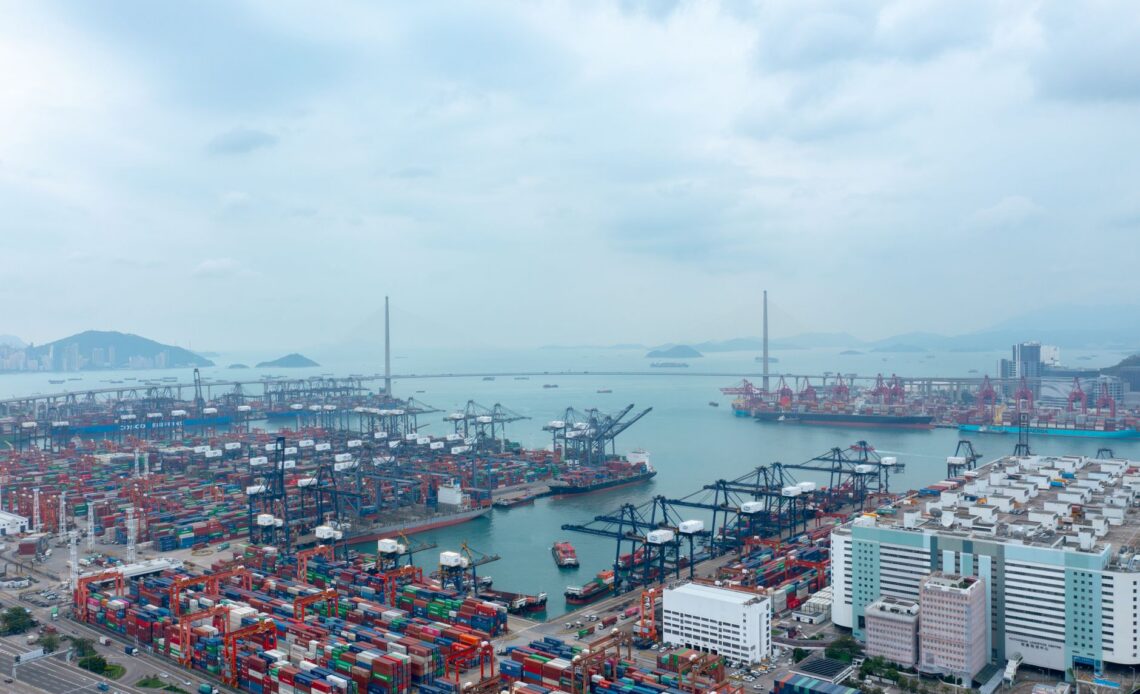
Vertical: Seaports
Application: Vessel traffic management, digital twin simulation, cargo flow optimization, shore power supply, IoT monitoring
Ecosystem: Santos Port Authority (APS), Ministry of Ports and Airports (Brazil), Itatinga Hydroelectric Plant
Private Network: Private 5G
| Brazil’s largest port complex deploys private 5G to unify vessel tracking, digital twin modeling, and renewable shore power. The Port of Santos initiative positions South America’s busiest container gateway as a blueprint for integrated smart port infrastructure combining connectivity, simulation, and decarbonization. |
The Port of Santos in Brazil is rolling out a comprehensive private 5G network deployment integrated with vessel traffic management and digital twin technology, marking one of South America’s most ambitious smart port transformation projects. As the largest port complex in the Southern Hemisphere, handling approximately 40 percent of Brazil’s seaborne foreign trade, Santos is leveraging advanced cellular connectivity to modernize traffic monitoring, cargo optimization, and environmental performance across its operational footprint.
The deployment forms part of the Porto de Santos Conecta agreement, a three-year initiative backed by a $6 million investment from the Santos Port Authority (APS) under the direction of Brazil’s Ministry of Ports and Airports. The network infrastructure will span administrative buildings and active port zones including Valongo, Outeirinhos, and Estuario, delivering high-bandwidth, low-latency connectivity to support real-time vessel tracking, sensor networks, and digital simulation platforms that mirror physical port operations.
| Metric | Detail |
| Network type | Private 5G |
| Coverage areas | Valongo, Outeirinhos, Estuario administrative and port zones |
| Investment | $6 million over three years |
| Project name | Porto de Santos Conecta |
| Key applications | VTMIS integration, digital twin modeling, shore power supply |
| Port throughput | Approximately 40% of Brazil’s seaborne foreign trade |
| Renewable power source | Itatinga Hydroelectric Plant (port-owned asset) |
Strategic Context for South America’s Largest Gateway
The Port of Santos occupies a unique position in global maritime logistics, serving as the primary trade corridor for Brazil’s agricultural exports, manufactured goods, and containerized cargo destined for markets worldwide. Despite its scale and throughput, port operations have historically relied on fragmented communication systems, limited real-time data visibility, and analog monitoring infrastructure that cannot support the predictive analytics or rapid decision-making required by modern shipping schedules.
With vessel sizes increasing, dwell times under scrutiny, and environmental regulations tightening, APS identified digital connectivity as the foundation for a suite of operational improvements. The private 5G deployment will enable the port authority to unify previously siloed data streams from radar installations, camera networks, and environmental sensors into a single, actionable operational picture. This integrated approach mirrors strategies seen in Hamburg’s container terminal automation, where dedicated cellular networks underpin autonomous equipment and logistics orchestration.
VTMIS Integration and Real-Time Vessel Monitoring
A core element of the Santos smart port strategy is the implementation of a Vessel Traffic Management Information System (VTMIS), which functions as a maritime air traffic control tower for the port’s access channels and berthing areas. The VTMIS platform relies on data feeds from radar installations, high-definition cameras, and environmental sensors positioned throughout the port complex, all connected via the private 5G network to ensure millisecond-level latency and guaranteed uptime.
By consolidating vessel position data, meteorological conditions, tidal information, and berth availability into a unified dashboard, VTMIS enables port operators to anticipate congestion, optimize pilotage schedules, and dynamically allocate berthing slots based on cargo handling requirements. The system is designed to reduce vessel queue times, improve channel utilization, and enhance safety by providing early warning of potential navigation conflicts or adverse weather conditions. Similar real-time monitoring architectures in rail transport have demonstrated measurable gains in throughput and incident reduction when underpinned by dedicated private networks.
| “What we are seeing is the materialization of the ‘Port of the Future’ concept. There is no longer a divide between expansion and preservation. By investing in cutting-edge technology such as 5G and clean energy, the federal government is demonstrating that it is possible for the largest port in the Southern Hemisphere to operate with maximum logistical efficiency while leading the global decarbonization agenda.” Silvio Costa Filho, Minister of Ports and Airports, Brazil |
Digital Twin Technology for Operational Simulation
Complementing the VTMIS deployment, the Port of Santos is implementing digital twin technology that creates a dynamic, software-based replica of the entire port environment. The digital twin ingests real-time data from the private 5G network, including vessel positions, cargo handling equipment status, warehouse inventory levels, and environmental conditions, to maintain an up-to-the-minute virtual model of port operations.
This virtual model allows port planners to simulate different operational scenarios, test the impact of berth allocation changes, model the effects of equipment maintenance schedules, and optimize cargo flows before committing resources in the physical world. For example, operators can evaluate how adjusting the arrival sequence of three container vessels will affect yard crane utilization, truck gate congestion, and overall terminal productivity. The approach draws on principles proven in manufacturing environments, where digital twins supported by low-latency connectivity deliver measurable reductions in downtime and operational cost. By enabling data-driven decision-making and predictive maintenance, the digital twin platform is expected to reduce bottlenecks, lower dwell times for cargo, and improve asset utilization across the port complex.
| “The implementation of VTMIS and digital twin tools raises the level of port management, bringing predictability and safety to navigation. We are aligning our operations with the practices of the most advanced ports in Europe and Asia.” Alex Ávila, National Ports Secretary, Brazil |
Shore Power and Renewable Energy Integration
In parallel with connectivity upgrades, the Port of Santos is advancing a shore power (Onshore Power Supply) project that will allow berthed vessels to shut down auxiliary diesel engines and connect directly to the port’s electrical grid. Shore power significantly reduces greenhouse gas emissions, particulate matter, and noise pollution in port neighborhoods, directly addressing environmental and public health concerns associated with heavy shipping traffic.
A distinguishing feature of the Santos shore power system is its exclusive reliance on renewable electricity generated by the Itatinga Hydroelectric Plant, a historic facility owned and operated by the port authority itself. Itatinga is currently undergoing a repowering program to increase generating capacity and extend operational life, with feasibility studies exploring the future production of green hydrogen for port equipment and cargo handling vehicles. The integration of shore power infrastructure with the private 5G network enables real-time monitoring of power consumption, automated billing for vessel operators, and predictive maintenance of electrical connections and distribution equipment. This convergence of clean energy and digital infrastructure reflects broader trends seen in utility sector deployments, where private cellular networks support grid automation and distributed energy resource management.
Tariff Incentives for Green Shipping
To accelerate the adoption of cleaner shipping practices, the Santos Port Authority has expanded its tariff discount policy for vessels with strong performance under the Environmental Ship Index (ESI), a voluntary certification that evaluates ship emissions, fuel efficiency, and environmental management systems. Qualified vessels receive reduced port fees, creating a direct financial incentive for shipowners to invest in cleaner propulsion technologies, exhaust gas treatment, and operational best practices.
The green tariff program complements the shore power infrastructure by rewarding vessels that arrive prepared to connect to grid electricity, reducing their overall environmental footprint while in port. By combining regulatory incentives with enabling infrastructure, APS is positioning Santos as a preferred destination for environmentally conscious carriers and cargo owners who face increasing scrutiny over supply chain emissions. The policy aligns with international initiatives such as the International Maritime Organization’s carbon intensity targets and reflects growing shipper demand for transparent environmental performance data across logistics networks.
Network Architecture and Deployment Timeline
While specific technical specifications for the private 5G network have not been publicly disclosed, the deployment is designed to support mission-critical applications including VTMIS data feeds, digital twin synchronization, and IoT sensor networks distributed across port infrastructure. The network will connect radar installations, high-definition surveillance cameras, environmental monitoring sensors, and mobile user devices operated by port personnel, terminal operators, and logistics service providers.
The three-year investment timeline for the Porto de Santos Conecta agreement suggests a phased rollout, beginning with core administrative and operational zones before expanding to more remote berths and cargo handling areas. The VTMIS platform is currently in the contracting phase, indicating that procurement and vendor selection are ongoing, with system integration and testing expected to follow once network infrastructure is commissioned. This staged approach is consistent with best practices observed in airport modernization projects, where private wireless networks are deployed incrementally to minimize disruption to live operations while validating performance benchmarks.
Broader Implications for Brazilian Port Infrastructure
The Santos deployment arrives at a pivotal moment for Brazilian port policy, as the Ministry of Ports and Airports seeks to position the country’s maritime gateways as competitive alternatives to rival hubs in North America, Europe, and Asia. By demonstrating the feasibility of integrated smart port infrastructure at scale, Santos provides a replicable model for smaller regional ports seeking to modernize operations, attract investment, and meet evolving environmental and safety standards.
The project also highlights the strategic value of port-owned renewable energy assets, enabling decarbonization pathways that would be difficult to achieve through grid connections alone. As other Brazilian ports evaluate similar initiatives, the Santos experience will offer valuable lessons on technology procurement, stakeholder coordination, and the operational benefits of unified connectivity platforms. The alignment of federal policy support, port authority investment, and clear use cases for advanced cellular technology distinguishes this deployment from earlier, more experimental private network trials in emerging markets, where regulatory uncertainty and limited budgets constrained deployment scope.
| KEY INSIGHT The Port of Santos demonstrates how private 5G networks can serve as the connective tissue linking vessel traffic management, digital twin simulation, and renewable energy infrastructure into a unified smart port platform. Ports evaluating similar transformations should prioritize use cases where real-time data integration delivers measurable operational or environmental outcomes, ensuring technology investments translate directly into throughput gains, safety improvements, or emissions reductions. |
Related Reading
- Deutsche Telekom and Ericsson Bring Private 5G to Hamburg’s Container Terminal Altenwerder
- Digital Twins and Private 5G: The Feedback Loop Explained
- Private 5G Network for Rail: Queensland Rail and Ericsson Build ETCS Infrastructure
- Tampa Electric Private LTE Network Deployment with Ericsson, OneLayer, and Burns & McDonnell Secures Mission-Critical Grid Communications Across 2,000 Square Miles of Florida Territory
- How Private Wireless Is Modernizing Airport Operations
- Paratus Namibia’s Private LTE and 5G Network Launch
Frequently Asked Questions
Q1: What is the Port of Santos deploying as part of its smart port strategy?
The Port of Santos is deploying a private 5G network integrated with Vessel Traffic Management Information System (VTMIS), digital twin simulation technology, and shore power infrastructure sourced from renewable hydroelectric generation to modernize operations and reduce emissions.
Q2: How much is being invested in the Porto de Santos Conecta project?
The Santos Port Authority is investing $6 million over three years in the Porto de Santos Conecta agreement to deploy private 5G infrastructure, expand digital capacity, and support new operational technologies across administrative and port zones.
Q3: Which port areas will the private 5G network cover?
The private 5G network will cover administrative buildings and active port zones including Valongo, Outeirinhos, and Estuario, providing connectivity for vessel monitoring, cargo optimization, and IoT sensor networks across these operational areas.
Q4: What is the purpose of the digital twin technology at the Port of Santos?
The digital twin creates a real-time virtual replica of port operations, enabling planners to simulate scenarios, optimize cargo flows, predict maintenance needs, and test operational changes before implementing them physically, reducing bottlenecks and costs.
Q5: How does the shore power system reduce port emissions?
Shore power allows berthed vessels to shut down diesel auxiliary engines and connect to the port’s electrical grid, eliminating combustion emissions while alongside. Power is sourced entirely from the renewable Itatinga Hydroelectric Plant owned by the port authority.
Q6: What role does VTMIS play in vessel traffic management?
VTMIS consolidates radar, camera, and sensor data over the private 5G network to provide real-time monitoring of vessel movements, enabling operators to optimize pilotage, manage berth allocation, and improve channel safety and efficiency.