
Vertical: Large Venues
Application: Fan connectivity, broadcast operations, referee body cameras, FWA for pop-up retail & logistics, public safety
Ecosystem: Verizon
Private Network: 5G
When the FIFA World Cup 2026 kicks off on June 11 across 16 host cities in the United States, Canada, and Mexico, a large portion of the connectivity backbone holding the event together will run on Verizon’s private 5G networks. As the Official Telecommunication Services Sponsor for the tournament, Verizon has been building out this infrastructure for well over a year, and the result is one of the most comprehensive private wireless deployments ever attempted at a sporting event.
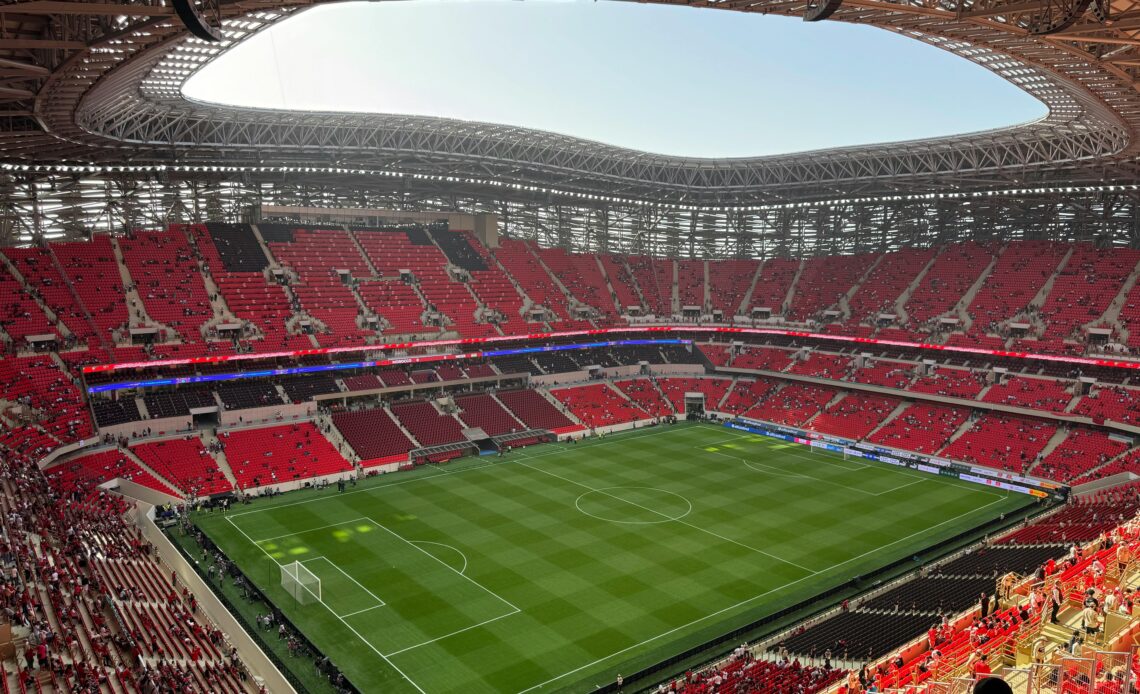
The scale of data demand alone makes the engineering challenge clear. Each match is projected to see fans inside a single stadium consume more than 50 terabytes of data – roughly the equivalent of streaming high-definition video continuously for more than three years. To handle that load, Verizon added spectrum across all host stadiums, boosting estimated network capacity by three to five times. Thousands of antennas were installed under seats, and large ball-shaped MatSing antennas – the largest of their kind deployed in a U.S. stadium – were mounted at elevation to deliver targeted 4G and 5G coverage to fans in upper sections. At MetLife Stadium in New Jersey, which will host the World Cup final on July 19, Verizon installed 2,400 antennas backed by six million feet of fiber throughout the building.
The private 5G layer serves a different set of requirements than the public-facing fan network. Inside host stadiums, private 5G provides the low-latency, high-throughput connectivity needed to support critical operational applications. One of the more visible of these is the Lenovo Referee View system, which uses body cameras worn by on-field officials to stream their point-of-view perspective to production and broadcast workflows in near-real time. That kind of application requires a network that is isolated, predictable, and hardened against the interference that comes with tens of thousands of simultaneously connected devices in an enclosed space. Private 5G addresses all three requirements.
Beyond the stadium footprint, Verizon is using 5G Fixed Wireless Access to bring high-speed connectivity to the temporary infrastructure that surrounds any tournament of this scale. Pop-up retail locations, merchandise stands, fan activation zones, and back-office logistics operations across the FIFA World Cup footprint are being served by FWA connections riding Verizon’s 5G Ultra Wideband network. The flexibility matters: FIFA can spin up a credentialed, high-throughput connection at a temporary site without running cable or waiting for a fixed broadband install. Network slicing is also in play, giving certain priority applications – broadcast feeds, public safety coordination, operational data – dedicated performance envelopes within the shared network.
The broadcast infrastructure runs on a separate but equally critical track. Verizon’s high-capacity fiber and wave services are powering the Broadcast Contribution Network, which serves as the primary transport layer for the International Broadcast Center. Through this network, FIFA can centrally collect ball-tracking and player statistics data, and deliver high-definition footage to rights holders distributing the matches to a global audience. Kyle Malady, CEO of Verizon Business, described it this way: “Seeing our advanced 5G and fiber networks create seamless, unforgettable experiences for fans, and knowing our investment will leave a lasting digital legacy for the host cities, truly underscores our commitment to connecting people to what matters most to them.”
Public safety is woven into the deployment as well. Verizon Frontline, the company’s mission-critical communications unit, has been working with host city public safety agencies for more than two years ahead of the tournament. First responders will have access to dedicated communications infrastructure designed to function reliably under the kind of extreme load conditions that characterize a major international event. Verizon notes it brings three decades of experience supporting public safety operations at large-scale gatherings to bear on this work.